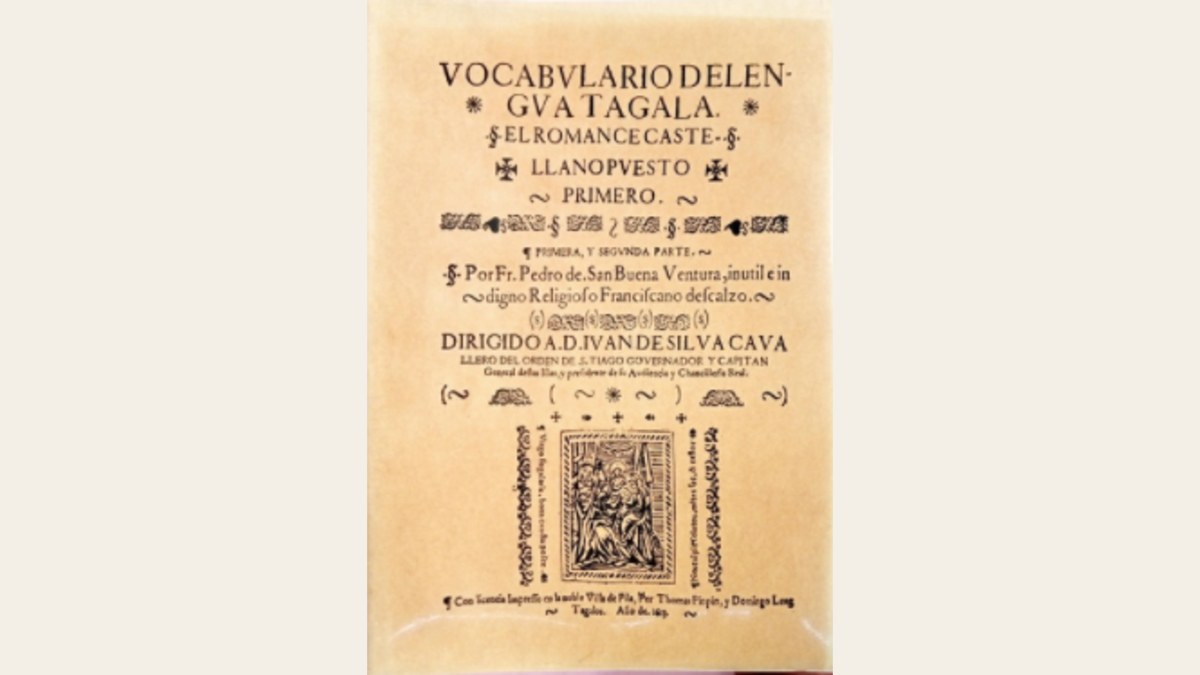
This glossary collects the basic Tagalog and Filipino words used on Juan Tamad, with a simple guide to pronouncing each one and its meaning in English. It is written for heritage learners: people who heard these words at home, at church, or at family parties, and want to know exactly what they mean.
How to Use This Glossary
Words are listed from A to Z. After each word, a pronunciation guide in parentheses shows the syllables, with the stressed syllable in capital letters, so salamat (sa-LA-mat) is stressed on the middle syllable. Stress varies from word to word, and it can change a word’s meaning, so the guide is worth checking. Where a word was borrowed from another language, such as Spanish, Malay, or Hokkien Chinese, we note that, too.
Meanings and stress follow the Tagalog entries in Wiktionary, the free online dictionary, which draws on published Tagalog dictionaries for many entries. Spellings follow the most common modern form, and we mention older or alternative spellings where they are widely used. New words are added as new pages are published.
A
Aguinaldo (a-gi-NAL-do): A Christmas or New Year present. The word comes from Spanish, and it is also spelled aginaldo. Godparents, grandparents, and other relatives traditionally give aguinaldo, often money, to children during the Christmas season.
Alamat (a-la-MAT): A legend. On this site, alamat refers to the Filipino origin legends that explain how something came to be, such as a fruit, a flower, or a place.
Ate (A-te): Elder sister or big sister, and a respectful way to address an older woman or girl, such as a senior classmate or coworker. The word was borrowed from Hokkien Chinese.
B
Balikbayan (ba-lik-BA-yan): A Filipino who returns to the Philippines after living abroad. The word joins balik, meaning to return, and bayan, meaning hometown or country.
Belen (be-LEN): A nativity scene showing the birth of Jesus. The word comes from the Spanish name for Bethlehem.
Bibingka (bi-bing-KA): A rice cake made from rice and coconut, a favorite after the dawn Masses of the Christmas season. The word was borrowed from Malay.
D
Diwata (di-WA-ta, with a slight catch in the throat at the end): A fairy, spirit, or goddess in Filipino folklore. In the Visayas and Mindanao, the word historically named the gods and spirits of native religion. The word also describes a beautiful maiden or a muse. It came into Tagalog from Cebuano, which took it from Malay dewata, and it ultimately goes back to a Sanskrit word for a god.
F
Filipino (fi-li-PI-no): The national language of the Philippines under the 1987 Constitution, based mainly on Tagalog. It is also the word for a person from the Philippines. Many Filipinos also speak a regional language, such as Cebuano, Ilocano, or Hiligaynon.
G
Gabi (ga-BI): Evening or night. It is the second word in Simbang Gabi, the Christmas dawn Masses.
J
Juan Tamad (HWAN ta-MAD): “Lazy John,” the famously lazy hero of Filipino folk tales, and the namesake of this site. Tamad means lazy.
K
Kapre (KA-pre): A giant in Filipino folklore believed to smoke cigars and live in old trees. The word comes through Spanish and Portuguese from an Arabic word for an unbeliever.
Kuya (KU-ya): Elder brother or big brother, and a respectful way to address an older man or boy. Like ate, it was borrowed from Hokkien Chinese.
L
Lola (LO-la): Grandmother, and an affectionate or respectful way to address an older woman. The word is thought to come from Spanish abuela.
Lolo (LO-lo): Grandfather, and an affectionate or respectful way to address an older man. The word is thought to come from Spanish abuelo.
M
Mabuhay (ma-BU-hay): “Long live,” used as a cheer and a toast, and in formal settings as a word of welcome. It is built from the root buhay, meaning life.
Maligayang Pasko (ma-li-GA-yang pas-KO): Merry Christmas. Maligaya means merry or happy, and Pasko means Christmas.
Mano (MA-no): The gesture of taking an elder’s hand and pressing the back of it to your forehead, as a sign of respect. The younger person often says mano po when asking for the elder’s hand. The word comes from Spanish mano, meaning hand.
Media Noche (MED-ya NO-che): The family feast held around midnight on New Year’s Eve. The Tagalog spelling is medyanotse, from the Spanish word for midnight.
N
Ninang (NI-nang): Godmother, or a female sponsor at a wedding. The word comes from Spanish madrina.
Ninong (NI-nong): Godfather, or a male sponsor at a wedding. The word comes from Spanish padrino.
Noche Buena (NO-che BWE-na): Christmas Eve, and the traditional family dinner held around midnight that night. The name comes from Spanish.
O
Opo (O-po, with a slight catch in the throat at the end): A polite way to say yes, combining oo, meaning yes, with po.
P
Parol (pa-ROL): The Christmas lantern of the Philippines, most often shaped like a star. The word comes from Spanish farol, meaning lantern.
Pasalubong (pa-sa-LU-bong): A gift brought home by someone returning from a trip.
Pasko (pas-KO): Christmas. The word comes from Spanish pascua.
Po (PO): A small word added to a sentence to show respect to the person you are speaking to, such as an elder. Salamat po is a respectful thank you.
Puto (PU-to): A steamed rice cake. The word was borrowed from Malay.
Puto bumbong (PU-to bum-BONG): A purple rice cake steamed in bamboo tubes, a popular treat during the Christmas dawn Masses. Bumbong refers to the bamboo tube it is cooked in.
S
Salabat (sa-la-BAT): Ginger tea, often served with rice cakes after the Christmas dawn Masses.
Salamat (sa-LA-mat): Thank you. The word was borrowed from Malay.
Simba (sim-BA): Going to church to pray or attend Mass.
Simbang Gabi (sim-BANG ga-BI): The series of nine Masses traditionally held before dawn from December 16 to 24, leading up to Christmas. Many parishes, especially in North America, hold them in the evening instead. The name combines simba and gabi.
T
Tagalog (ta-GA-log): The language of Manila and the surrounding provinces, and the basis of Filipino, the national language. Tagalog is also the name of the people who speak it as their first language.
Tamad (ta-MAD): Lazy, or a lazy person. It is the second half of Juan Tamad’s name.
Tsokolate (tso-ko-LA-te): Chocolate, especially thick hot chocolate served as a drink. The word comes from Spanish chocolate.