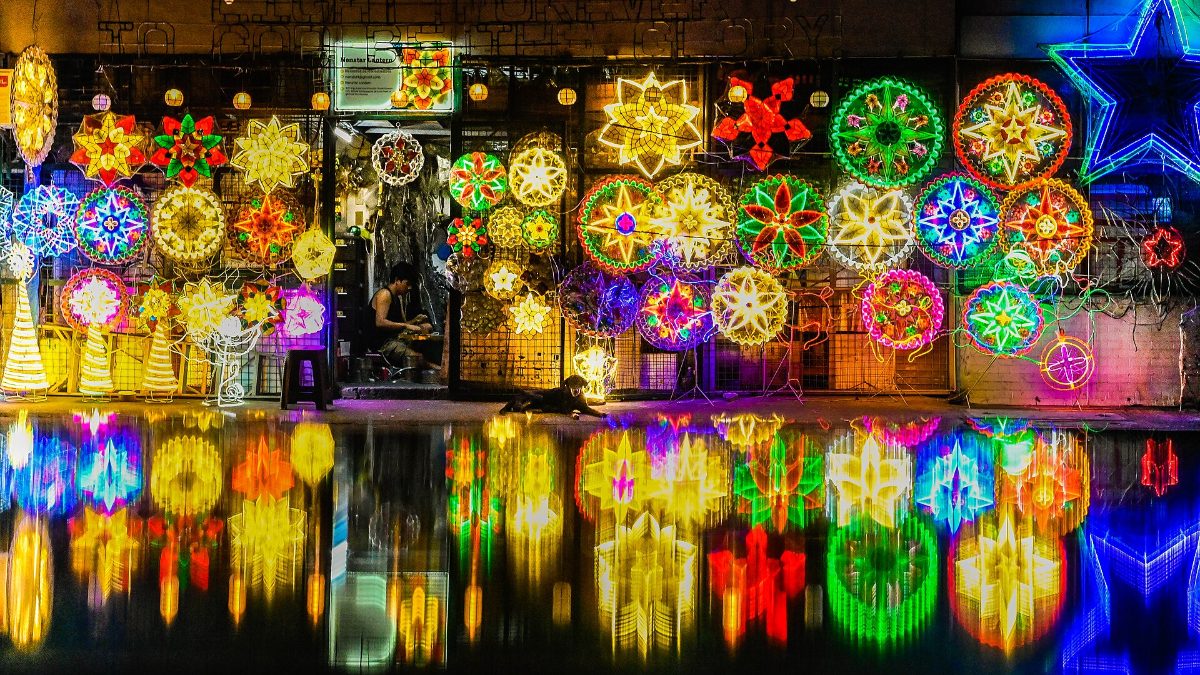
A parol is a Filipino Christmas lantern, most often shaped like a five-pointed star with two decorative tails, that represents the Star of Bethlehem.
Traditionally made of bamboo and Japanese paper, it hangs outside Filipino homes and churches through the Christmas season, in the Philippines and in Filipino communities around the world.
What Parol Means and How to Say It
Parol is pronounced pa-ROL, with the stress on the second syllable. The word comes from the Spanish farol, meaning lantern.
In Kapampangan, the language of Pampanga province, it is written parul, as in Ligligan Parul, the Kapampangan name of San Fernando’s lantern festival.
What the Parol Symbolizes
The parol’s five-pointed star stands for the Star of Bethlehem, which, in the Gospel of Matthew, guided the Magi, known in tradition as the Three Wise Men, to the newborn Jesus. For many Filipinos, it also carries a broader meaning of hope.
One architect quoted by VERA Files described the parol as a reminder that God is always present, whatever a family’s struggles.
Where the Parol Came From
The parol’s link to Christmas dates back to the Spanish colonial period. It grew out of the Hispanic custom of carrying small lights in religious processions.
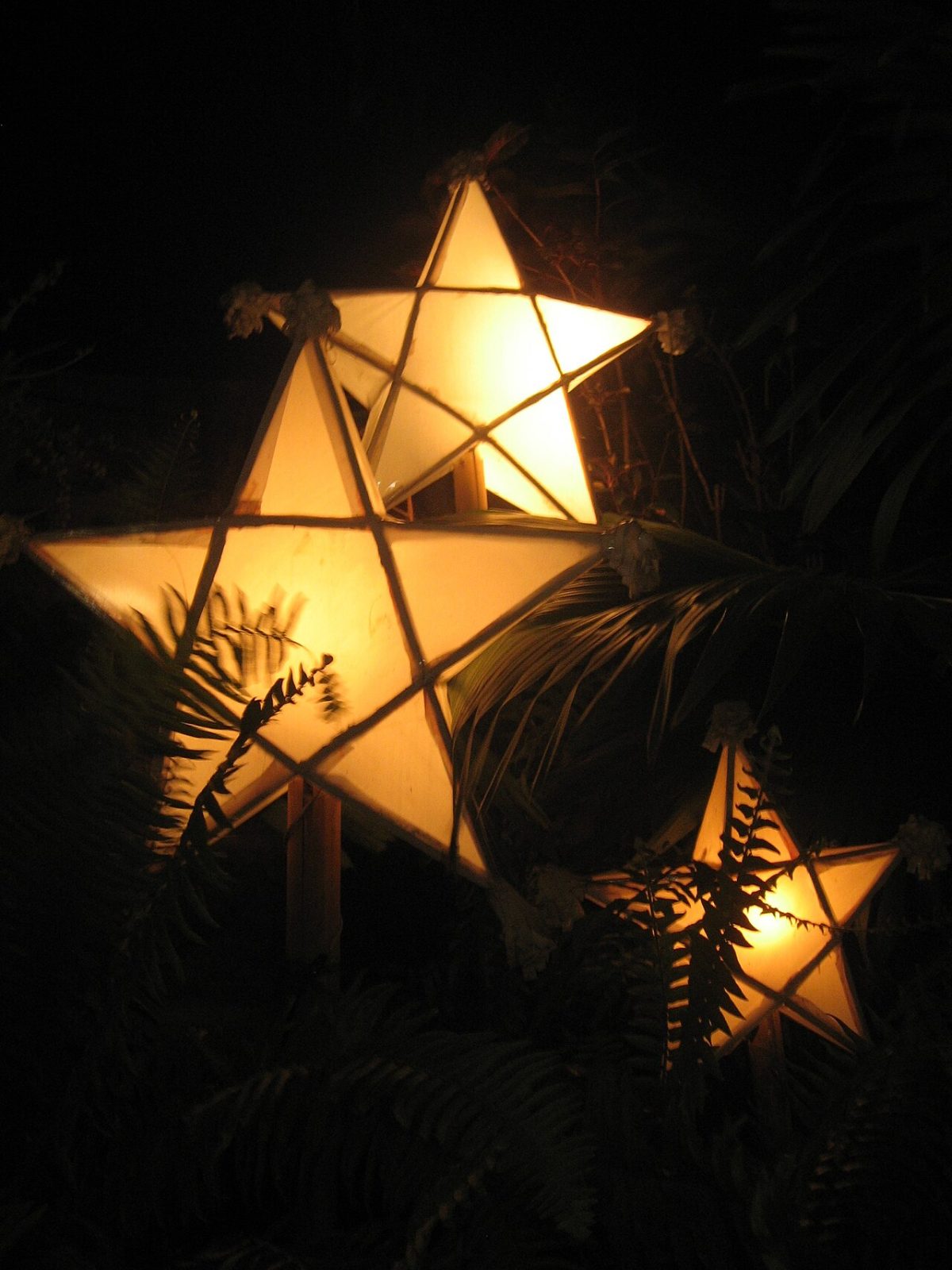
According to traditional accounts, candle-lit lanterns of bamboo and paper lit the way for people walking to church for the dawn Masses in the nine days before Christmas, and, after the processions, the lanterns were hung outside houses as decorations.
Some accounts say paper lanterns were already known in the Philippines before the Spanish arrived.
Some writers also see a Mexican connection. For about 250 years, galleons sailing between Manila and Acapulco carried religious customs across the Pacific, and Mexico has its own star-shaped lanterns and Las Posadas, a Christmas procession much like the Panunuluyan.
The exact route is uncertain. Writing for VERA Files in 2012, journalist Norman Sison suggested the tradition reached the Philippines from Spain through Mexico, while accounts from New Mexico describe Asian paper lanterns reaching the Americas on the same galleons, so lantern customs may have traveled in both directions.
The earliest Spanish-era parols looked quite different from today’s. They were simple rectangular or oblong shapes made with white paper, and, since every lantern was made by hand, designs varied from household to household.
They were lit with candles or oil lamps, and later with carbide lamps.
In Pampanga, lanterns were carried around each village in processions called lubenas, a tradition that dates back to the 1800s. Before the midnight Mass on Christmas Eve, these lanterns were brought to the town church along with the image of each village’s patron saint.
The Five-Pointed Star
The parol took on its standard five-pointed star shape during the American colonial period. According to oral accounts, a craftsman from Pampanga named Francisco Estanislao made the first five-pointed star parol in 1908.
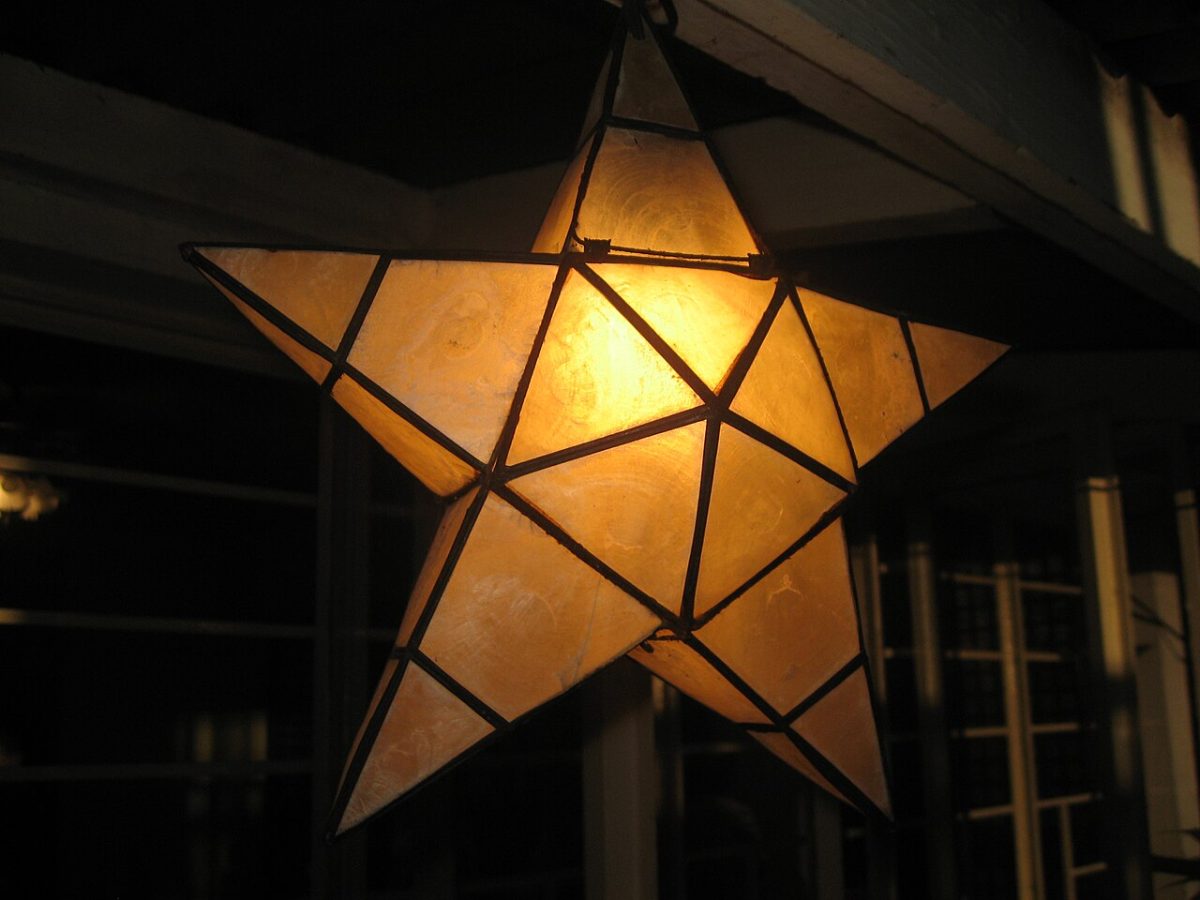
Some sources describe him as a salt maker from Santa Lucia, San Fernando, and the story is widely repeated, though it rests on oral tradition and the exact origins of the design remain uncertain.
Technology kept changing the parol. In San Fernando, the first battery-operated parols with incandescent bulbs appeared in the 1940s, and, in 1957, a lantern maker named Rodolfo David introduced parols with rotor systems, which controlled the patterns of their lights.
San Fernando and the Giant Lantern Festival
The city of San Fernando in Pampanga is nicknamed the “Christmas Capital of the Philippines” for its lantern makers and its famous lantern festival.
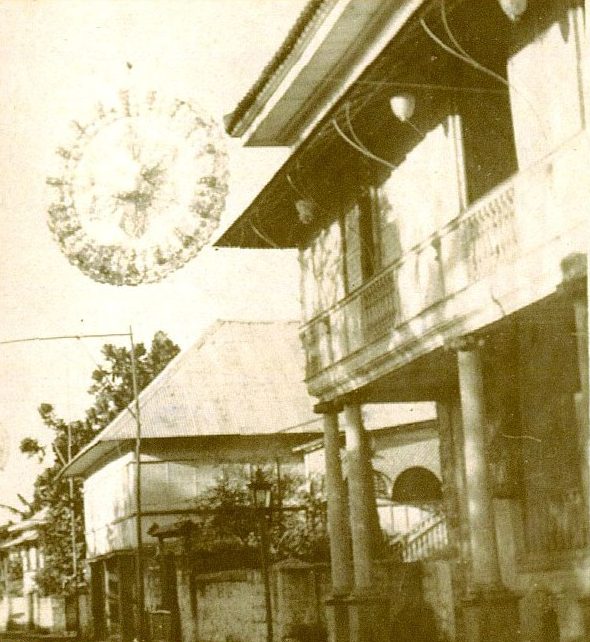
Each December, it holds the Giant Lantern Festival, known in Kapampangan as Ligligan Parul, which VERA Files translates as “lantern showdown,” in which villages compete with enormous electric parols.
Accounts of the festival’s beginnings differ.
VERA Files and the Inquirer say the first parol festival was held in 1930, the year electricity reached the city, while Wikipedia’s article on the festival dates the arrival of electricity and the first festival to 1931 and traces earlier lantern contests to the early 1900s.
Today’s giant lanterns are about 20 feet across, and each is lit by thousands of bulbs. Large steel drums called rotors control the lights, and, in the final round, the lanterns are made to “dance” in time with a brass band or recorded music.
How a Parol Is Made
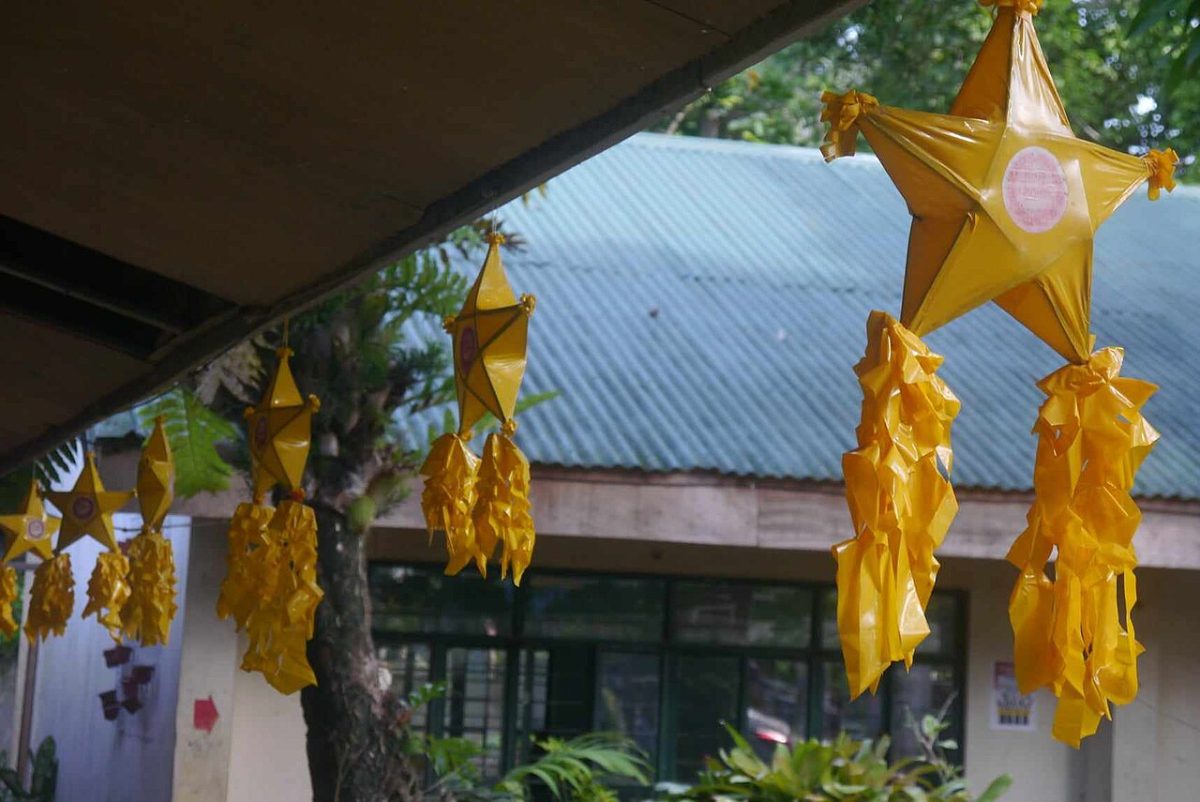
A traditional parol has a frame of bamboo sticks covered in colored Japanese paper, called papel de Japon, or crepe paper, with two paper tails hanging from the lower points.
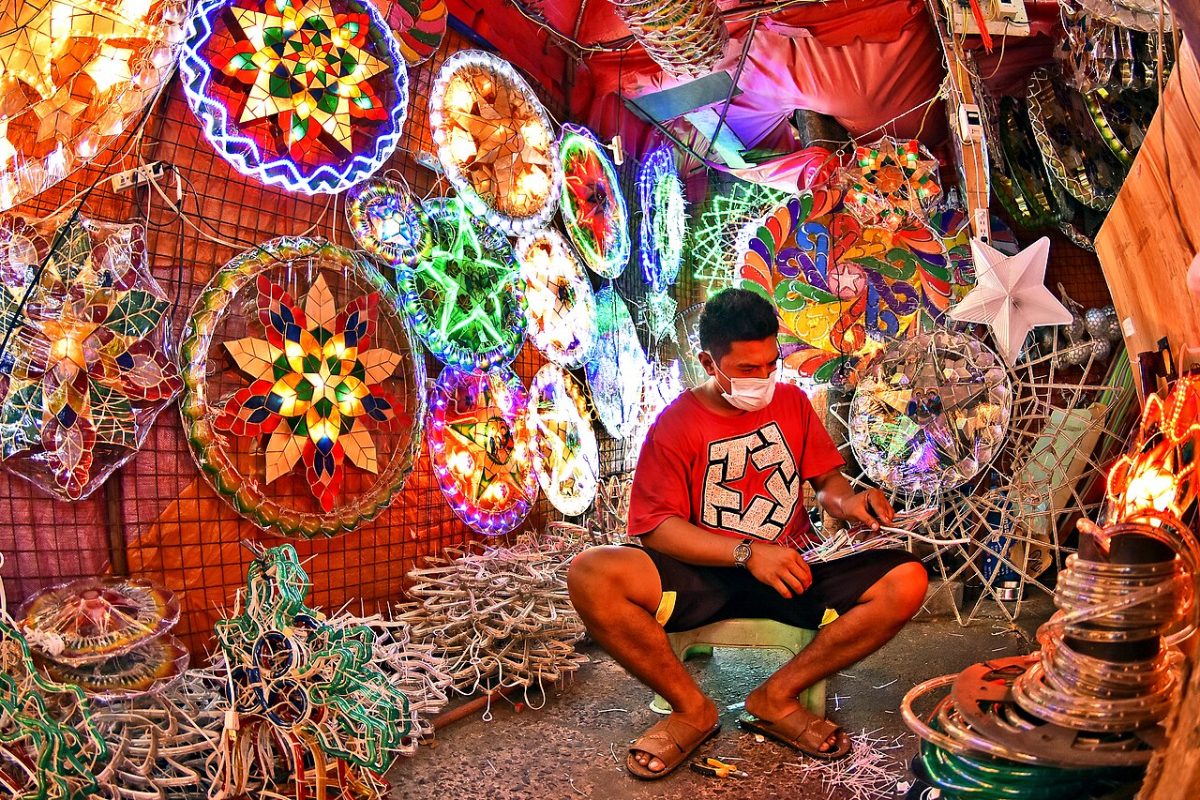
The tails are decorative, and none of the sources we consulted gives them a fixed meaning. In Pampanga, elaborate lanterns are built in up to four concentric layers, known in Kapampangan as the tambor, siku-siku, palimbun, and puntetas.
Modern parols use materials such as plastic, metal, capiz shells, glass, wood, and LED lights. Capiz shells, the thin, translucent shells of the windowpane oyster, were widely used in place of glass in Filipino windows during Spanish colonial rule.
How to Make a Simple Parol at Home
You can make a basic star parol at home with thin sticks, rubber bands, and paper. This method follows a craft tutorial published by Apartment Therapy and keeps to the traditional star-and-tails design.
You will need 11 sticks of bamboo or balsa wood of the same length, plenty of rubber bands, craft glue or a hot glue gun, scissors, a small saw or craft knife for cutting the sticks, wire or string, and tissue paper or cellophane in the colors you like.
Ten sticks make the frame, and the eleventh is cut into pegs.
- Make the first star. Join two sticks at one end, in a V shape, and hold the point with a rubber band, without glue. Make a second V, cross the two into an A shape, and band the open ends. Lay a fifth stick across to finish the star, and band each joint.
- Make a second star exactly like the first.
- Lay the two stars on top of each other and band all five points together. Keep the bands snug but not too tight, since the frames need to flex apart in the next step.
- Cut five short pegs of equal length, a few inches each, from the extra stick. Gently pull the two stars apart at the middle, and wedge one peg into each inner corner, so the lantern becomes three-dimensional. Glue the pegs in place.
- Cover each side of the star with paper or cellophane, leaving the edges open if you want light to shine through.
- Make two tails. For each one, fold a large sheet of tissue paper into a small triangle, then cut slits about an inch apart along the open side, stopping about an inch short of the folded edge. Unfold it carefully, gather it at the center with a twist tie or string, and attach it to one of the two lower points.
- Tie a loop of wire or ribbon to the top point, and hang the parol in a window where daylight or a nearby light can shine through it.
Before electricity, parols were lit with candles. For safety, don’t put an open flame inside a paper parol; hang it where light can shine through it, or use low-heat, battery-powered LED lights made for decorations.
A paper parol is best displayed indoors, away from heaters and moisture.
Prefer to watch? In this short video from BuzzFeed Nifty, a Filipino mother and daughter build a parol the same way, from the bamboo stars and rubber bands to the cellophane and the fringed tissue-paper tails.
The UP Lantern Parade
In Manila, the University of the Philippines has held a lantern parade since 1922, when students carried lanterns in honor of the old custom of lighting the way to the dawn Masses. In 1934, UP President Jorge Bocobo made it an official year-end tradition.
Today, on the Diliman campus in Quezon City, colleges build towering lanterns and floats, often with themes about current events, and parade them in December around the campus’s two-kilometer Academic Oval.
The Parol Abroad
The parol has traveled with the Filipino diaspora. Parol makers in San Fernando have shipped lanterns to Dubai, Saipan, and Guam, and parols are now made for export as symbols of Filipino identity for communities overseas.
In the United States, San Francisco and Los Angeles hold parol festivals in December, and community workshops in Chicago teach families to make their own.
Filipino supermarkets such as Seafood City carry imported parols during the Christmas season, though selection and prices vary by store. In December 2023, AsAmNews reported a 36-inch parol selling at Seafood City for US$349.99.
The parol has reached Europe too. In 2006, the Philippine Embassy in Austria introduced parols to Vienna with an exhibition, and in 2007, 60 parols made in San Fernando decorated a “Philippine Tree” at the Christmas market in front of the city hall.
For many Filipinos living abroad, the parol stands for home. One Filipino who had lived overseas told VERA Files that it was the parol, not the Christmas tree or mistletoe, that gave him hope and reminded him of home.
Related Traditions
The parol is closely tied to Simbang Gabi (sim-BANG ga-BI), the nine Masses before Christmas that are traditionally held at dawn, and it remains associated with them today.
It is also associated with the Panunuluyan, a traditional Christmas Eve pageant and procession that reenacts Mary and Joseph’s search for shelter in Bethlehem.
Frequently Asked Questions
These are short answers to common questions about the parol, drawn from the sources listed below.
What Is a Parol Made Of?
Traditional parols are made of bamboo sticks covered with Japanese paper. Modern parols also use plastic, metal, capiz shells, glass, and electric or LED lights.
What Does the Parol Symbolize?
The five-pointed star represents the Star of Bethlehem that guided the Three Wise Men to Jesus. Many Filipinos also see it as a symbol of hope.
When Do Filipinos Put Up Their Parols?
Parols go up during the Christmas season, which, in the Philippines, begins gradually in September. Some families start making them as early as September. They usually stay up into January and are traditionally taken down after Three Kings’ Day, the Feast of the Epiphany.
What Do the Two Tails Mean?
The tails are decorative. The sources we consulted describe them as part of the traditional design but give them no fixed symbolic meaning.
Who Made the First Star-Shaped Parol?
According to oral accounts, Francisco Estanislao of San Fernando, Pampanga, made the first five-pointed star parol in 1908, though the exact origins of the design are uncertain.
What Is the Giant Lantern Festival?
It is an annual competition held each December in San Fernando, Pampanga, where villages show off giant electric parols about 20 feet across that flash in time with music.
Sources
- “Parol.” Wikipedia. Accessed November 28, 2026.
- “Giant Lantern Festival.” Wikipedia. Accessed November 28, 2026.
- R.C. Ladrido. “The Visual Delight of the Filipino Parol.” VERA Files, December 12, 2022.
- Norman Sison. “The Philippine Parol and the Mexican Connection.” VERA Files, December 24, 2012.
- “Is Parol-Making a Dying Tradition?” Inquirer Lifestyle, December 23, 2017.
- “Here’s How to DIY a Parol Depending on Your Craft Level.” Inquirer USA, November 16, 2023.
- Ashley Poskin. “How to Make a Filipino Christmas Star.” Apartment Therapy, December 8, 2015, updated December 19, 2019.
- Monica Buchanan Pitrelli. “The Country That Celebrates Christmas for More Than 4 Months a Year.” CNBC, December 21, 2021.
- “Christmas in the Philippines.” Wikipedia. Accessed November 28, 2026.
- “Parol.” Wiktionary, Tagalog entry. Accessed November 28, 2026.
- “The Christmas Tradition at UP Diliman.” University of the Philippines Diliman Information Office. Accessed November 28, 2026.
- “Lantern Parade.” Iskomunidad, University of the Philippines Diliman. Accessed November 28, 2026.
- “In Photos: Artistry, Activism in Full Display at UP Lantern Parade 2023.” Philstar, December 21, 2023.
- Dhanika Pineda. “Maligayang Pasko! A Guide to Fil-Am Christmas Traditions.” AsAmNews, December 22, 2023.
- “Las Posadas” and “Farolito.” Wikipedia. Accessed November 28, 2026.
- Rathauskorrespondenz, City of Vienna press service, November 20, 2007 (Philippine Tree at the Wiener Christkindlmarkt).
- “Farolito.” Wikipedia. Accessed November 28, 2026.