Filipino traditions are the holidays, religious devotions, and family customs that mark the Filipino year and the milestones of a Filipino life. This section explains each one in English, where it comes from, and how Filipino families keep it in the United States and Canada.
What This Section Covers
Many Filipino traditions, such as Simbang Gabi and the parol, took shape during the Spanish colonial period, when Catholic customs were adapted to life in the Philippines. Others have been reshaped by Filipinos living abroad.
Running through many of them are family customs, from the respect shown to elders to the special role of godparents.
This section is organized around the calendar and around life events. Seasonal guides explain the holidays and festivals, and life-event guides cover the celebrations that mark a person’s life.
Every guide uses English first, explains each Filipino word it uses, and lists its sources at the end.
Christmas Traditions
Christmas is the longest season of the Filipino year, and it is where this section begins. In the Philippines, the season starts gradually in September, at the beginning of the “ber” months, and is often described as the longest Christmas season in the world.
- Filipino Christmas Traditions: A guide to the whole season, from the “ber” months to Three Kings’ Day, including Noche Buena, godparents’ gifts, caroling, and how families celebrate in North America.
- Simbang Gabi: The nine Masses before Christmas, held at dawn in the Philippines and usually in the evening in the United States and Canada, with their history and customs.
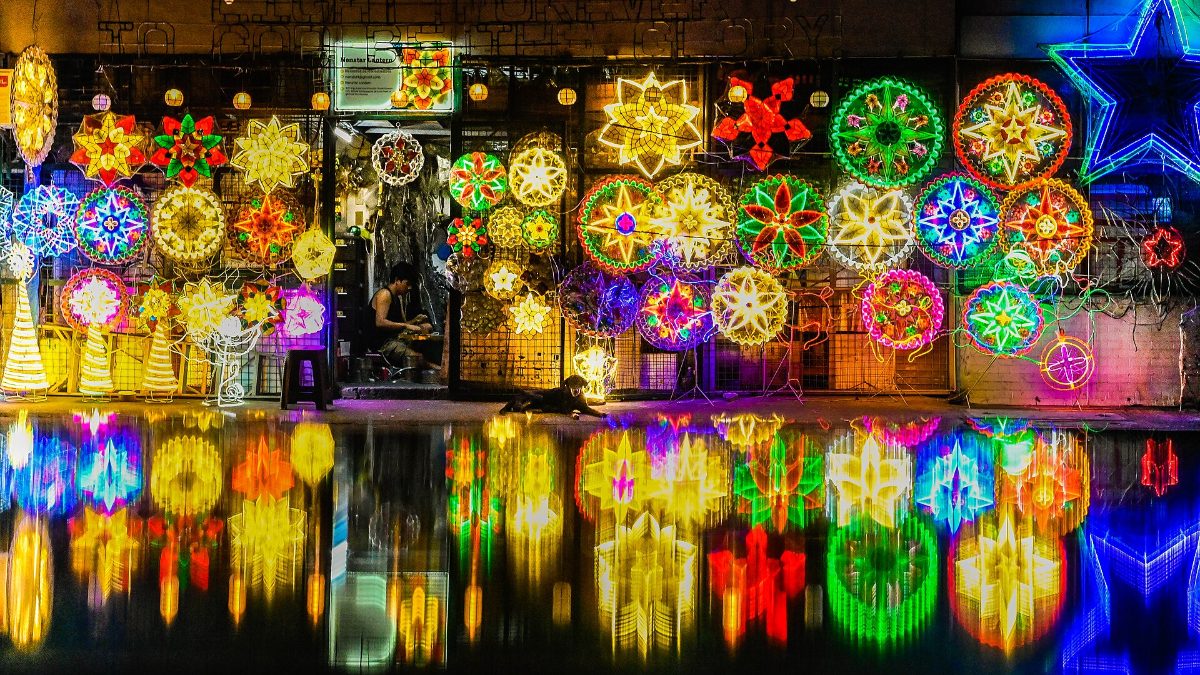
- The Parol: The Filipino Christmas Star: The star-shaped lantern that symbolizes the Star of Bethlehem, its history, the Giant Lantern Festival, and how to make one at home.
More guides are added here as they are published, covering the rest of the Filipino year and the major life events.
The Filipino Year
Many of the best-known Filipino celebrations reflect the country’s Catholic heritage. Muslim Filipinos, Indigenous peoples, and other religious communities keep their own calendars, too, and Eid al-Fitr and Eid al-Adha are national holidays in the Philippines.
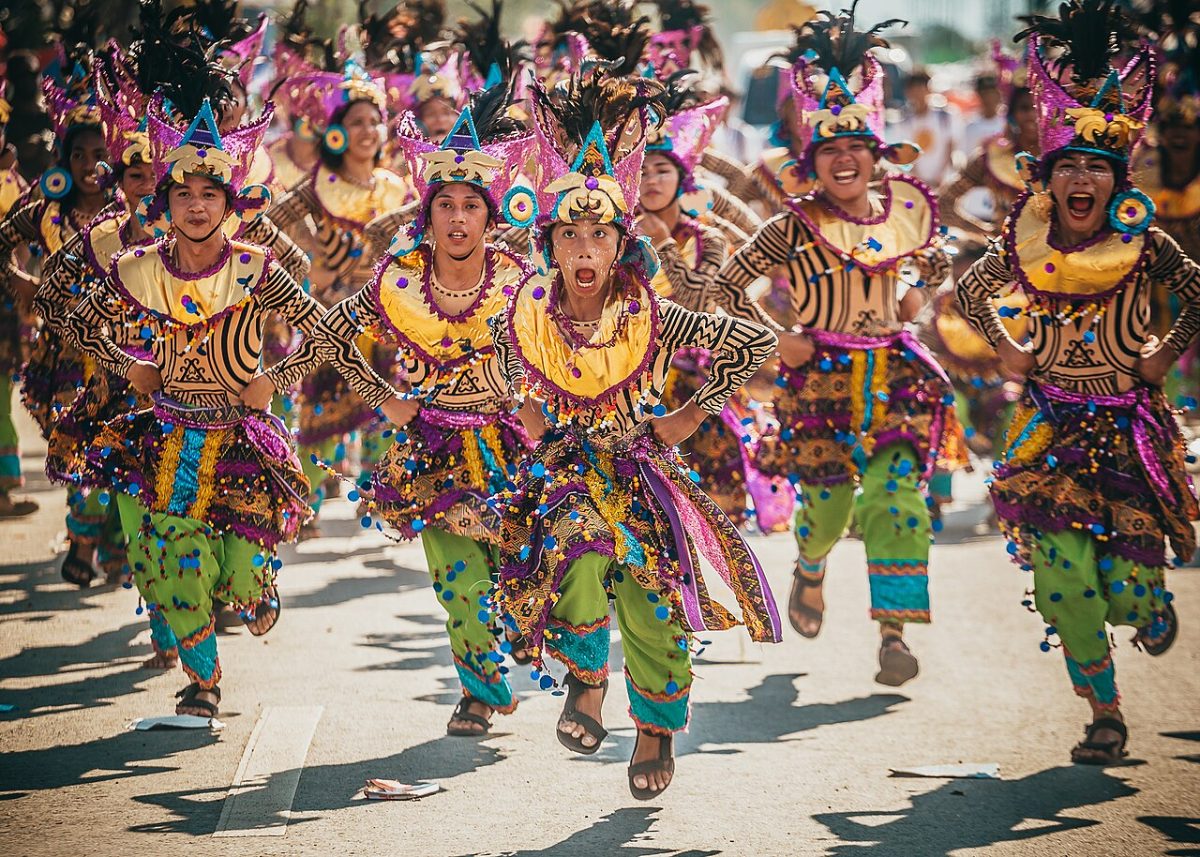
The Christmas season alone runs from September into January. For many families, Three Kings’ Day, in early January, traditionally marks the end of Christmas festivities, and popular celebrations often continue until the Feast of the Santo Niño on the third Sunday of January.
January belongs to the Santo Niño. On the third Sunday, Cebu holds the Sinulog and Aklan the Ati-Atihan, with crowds chanting “Pit Señor!” and “Hala Bira!,” and Iloilo’s Dinagyang follows on the fourth Sunday.
During Lent, and above all in Holy Week in March or April, communities hold the Pabasa, a communal chanting of the Pasyon, a verse narrative of Christ’s life, suffering, death, and resurrection; the Senakulo, a passion play; and the Visita Iglesia, visits to seven churches on Holy Thursday. Easter morning begins with the Salubong, a dawn procession in which the risen Christ meets his mother.
May is the month of flowers. Flores de Mayo, Spanish for “flowers of May,” is a monthlong devotion to the Virgin Mary, with prayers and flower offerings.
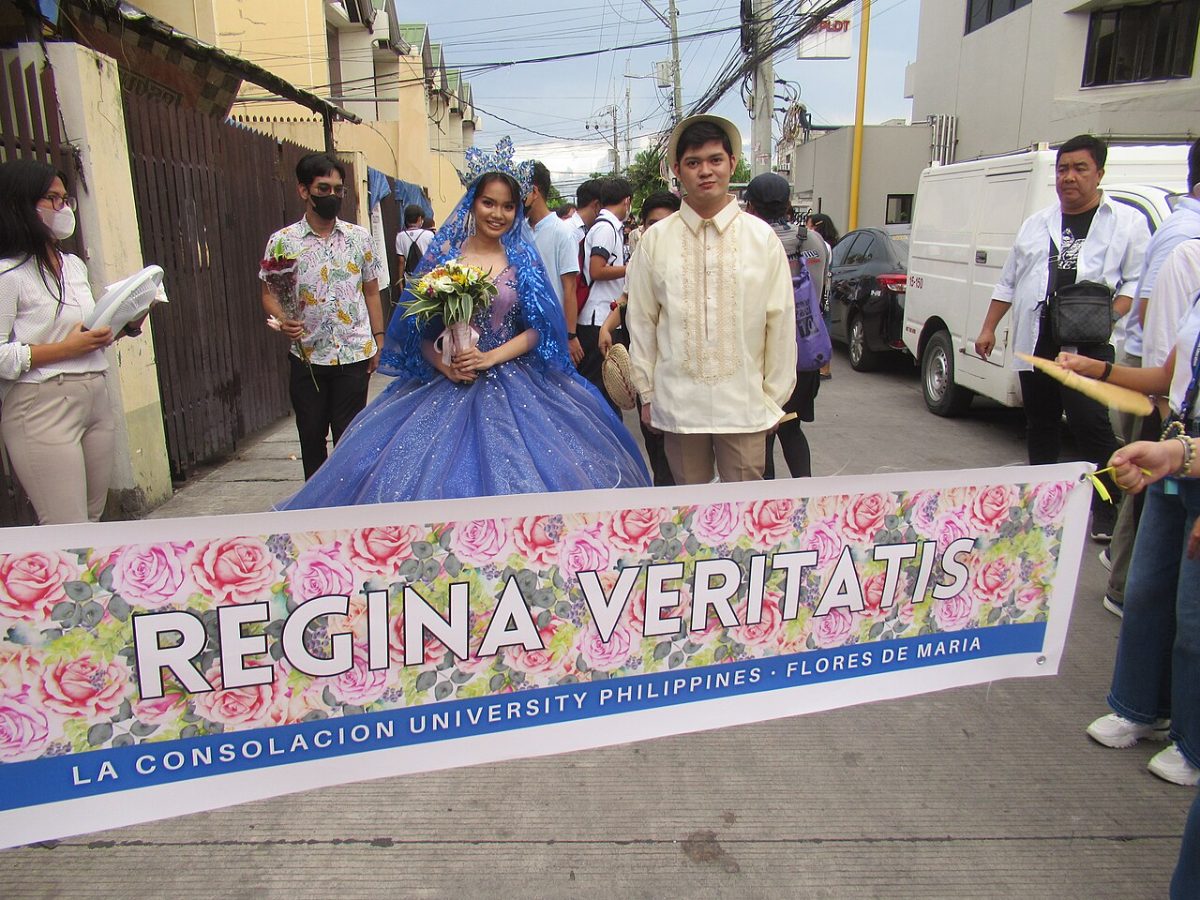
Many communities close it with a Santacruzan, a procession recalling the traditional account of Saint Helena, mother of the emperor Constantine, finding the cross of Jesus. Young women in the procession represent biblical figures, virtues, and titles of Mary.
Throughout the year, towns and barangays celebrate their fiesta, the feast day of their patron saint, with a Mass, a procession, and food shared with visitors. Under Spanish rule, scattered communities were often required to resettle in towns built around a church, a policy called reducción, and missionaries introduced patron saint feasts that blended with older Filipino traditions of communal feasting.
On November 1 and 2, during Undas, families visit their dead at the cemetery, cleaning graves, lighting candles, and sharing food, and some stay through the night. The name comes from the Spanish honras, meaning honors.
Guides to each of these will be added to this section as they are published.
Milestones of a Filipino Life
Filipino families mark life’s milestones in ways that vary by region, religion, and family, and many familiar customs have Catholic roots.
Baptism welcomes a child into the Church and gives them a ninong and ninang, godparents who stay part of their life. Sponsors are chosen again at a wedding, where several pairs of principal sponsors, also called ninong and ninang, stand as witnesses.
A young woman’s 18th birthday is often celebrated with a debut, a formal party built around a cotillion, a group dance often set to a waltz. Eighteen young men, her “roses,” each dance with her, and eighteen “candles” offer her wishes. Some families also mark a young man’s 21st birthday, though usually less formally.
A wedding begins with the pamamanhikan, when the groom and his parents visit the bride’s family to ask for her hand. At the ceremony, sponsors drape a veil over the couple and loop a cord around them in a figure eight, and the groom gives the bride 13 coins called the arras.
At the reception, guests pin money on the couple during the money dance to help them start married life. When someone dies, families keep a wake, often waiting for relatives from far away to arrive before the burial.
Family Customs That Run Through Many Traditions
A few customs appear again and again across Filipino celebrations, and knowing them makes the rest easier to understand.
The mano (MA-no) is a gesture of respect in which a younger person takes an elder’s hand and presses the back of it to their forehead, saying mano po, a respectful way of asking for the elder’s blessing. Po (PO) is a small word added to speech to show respect to the person being addressed, and opo (O-po) is the respectful way to say yes.
Godparents, called ninong (NI-nong) and ninang (NI-nang), play a special part at Christmas, when it is customary for them to give their godchildren aguinaldo (a-gi-NAL-do, also spelled aginaldo), a Christmas gift.
Travel brings its own customs. A balikbayan (ba-lik-BA-yan) is a Filipino visiting or returning to the Philippines after living abroad, and a pasalubong (pa-sa-LU-bong) is a gift brought home by someone returning from a trip.
Why Traditions Matter to Filipinos Abroad
For Filipinos in the United States and Canada, traditions are a living link to family history and to the Philippines. Many families adapt them to life in North America, while keeping their meaning.
Simbang Gabi is a clear example: in the Philippines, it is traditionally held before dawn, while many parishes in the United States and Canada hold it in the evening. In 2024, the Archdiocese of Chicago listed 55 parishes celebrating it.
Filipino history and heritage are also recognized with official months in both countries. In the United States, October is Filipino American History Month.
The month marks the first documented arrival of Filipinos in what is now California, at Morro Bay on October 18, 1587. The Filipino American National Historical Society proposed the observance in 1991, and the first was held in October 1992.
In 2009, the US Senate and House of Representatives each passed a resolution recognizing it.
In Canada, June is Filipino Heritage Month. The City of Toronto became the first Canadian municipality to mark June as Filipino Heritage Month, and federal recognition came on October 30, 2018, through Motion M-155, put forward by Member of Parliament Salma Zahid.
Ontario later passed its own Filipino Heritage Month Act, which received Royal Assent on May 20, 2021.
These months give schools, libraries, and community groups a set time each year to focus on Filipino history and heritage.
Key Sources
Our tradition guides draw on church sources, such as diocesan pages and Catholic news services, for religious customs; established news organizations in the Philippines, the United States, and Canada for how traditions are kept today; and reference works for history and dates.
Each guide lists its own sources at the end. The sources for this page are listed below.
Frequently Asked Questions
These are short answers to common questions about Filipino traditions, drawn from the sources listed below.
When Does the Filipino Christmas Season Start?
It starts gradually in September, at the beginning of the “ber” months, and lasts into January.
What Is the Most Important Filipino Christmas Tradition?
Families have their own favorites, but Simbang Gabi, the nine Masses before Christmas, the parol lantern, and the Noche Buena feast on Christmas Eve are among the best-known customs of the season.
When Is Filipino American History Month?
Filipino American History Month is held every October in the United States, marking the first documented landing of Filipinos at Morro Bay, California, on October 18, 1587.
When Is Filipino Heritage Month in Canada?
Filipino Heritage Month is held every June in Canada.
What Is Undas?
Undas is the Filipino observance of All Saints’ Day and All Souls’ Day on November 1 and 2, when families visit the graves of their loved ones with candles, flowers, and food.
What Is a Filipino Debut?
A debut is a formal celebration of a young woman’s 18th birthday, with a cotillion dance and a court of 18 “roses” and 18 “candles.” Some families also mark a young man’s 21st birthday, usually less formally.
What Is a Balikbayan?
A balikbayan is a Filipino who visits or returns to the Philippines after living in another country. The word joins balik, to return, and bayan, hometown or country.
Sources
- “Christmas in the Philippines.” Wikipedia. Accessed November 28, 2026.
- “Simbang Gabi” and “Parol.” Wikipedia. Accessed November 28, 2026.
- Simone Orendain. “Filipino Simbang Gabi Masses More and More Rooted in the US.” OSV News, published in the Catholic Review, December 22, 2024.
- “Simbang Gabi Adds Filipino Flare to Feast.” The Catholic Register, December 20, 2018.
- “Filipino American History Month.” Wikipedia. Accessed November 28, 2026.
- “Filipino Heritage Month.” Wikipedia. Accessed November 28, 2026.
- Monica Buchanan Pitrelli. “The Country That Celebrates Christmas for More Than 4 Months a Year.” CNBC, December 21, 2021.
- “Mano,” “po,” “opo,” “ninong,” “ninang,” “aginaldo,” “balikbayan,” and “pasalubong.” Wiktionary, Tagalog entries. Accessed November 28, 2026.
- Dolly Dy-Zulueta. “Ati-Atihan, Dinagyang, Sinulog: A Look at 3 Festivals Honoring Sto. Niño.” Philstar, January 28, 2024.
- “The Origins of January Fiestas in the Philippines.” Rappler. Accessed November 28, 2026.
- Carby Rose Basina. “From Pabasa to Salubong: Holy Week Practices Explained.” GMA News, March 31, 2026.
- Deni Rose M. Afinidad-Bernardo. “Explainer: Santacruzan, Flores de Mayo: What’s the Difference?” Philstar, May 22, 2024.
- “Keeping Filipinos’ Undas Traditions Alive.” Inquirer, November 2, 2022.
- “Filipino Families Keep Their Loved Ones Close on All Saints’ Day.” Associated Press, November 1, 2026.
- “Sleeping at Cemeteries and Other Filipino All Souls Day Traditions.” Inquirer USA. Accessed November 28, 2026.
- Bibsy M. Carballo. “The Filipino Debut Tradition Alive and Well.” The Philippine Star, February 11, 2013.
- “Philippine Debut” and “Marriage in the Philippines.” Wikipedia. Accessed November 28, 2026.
- Jove Moya. “5 Unique Wedding Traditions in the Philippines: Pamamanhikan, Money Dance, and More.” Tatler Asia, August 7, 2021.
- Republic Act No. 9177 (2002), declaring Eid al-Fitr a national holiday, and Republic Act No. 9849 (2009), declaring Eid al-Adha a national holiday. Official Gazette of the Philippines.