This page lists the sources and licenses for the images used on Juan Tamad. We credit images here, grouped by the page they appear on, rather than under each image, so that our articles stay easy to read. Where a license requires credit next to the image itself, we give it there, too.
Where Our Images Come From
We use three kinds of images. Some are in the public domain, such as illustrations and photographs from old books and archives whose copyright has expired. Some are used under open licenses, such as Creative Commons, which allow reuse under conditions such as crediting the creator. Others are created or commissioned for this site. Some of our illustrations are made with AI image tools, and each one is labeled as AI-generated in its caption and in the credits below. These are illustrations, not historical photographs or documentary evidence.
For every image that is not our own, we record the creator, where the image was published, and the license that allows us to use it. When a license requires a specific form of credit, we give it here exactly as the license asks.
Image Credits by Page
Credits are listed below by page as images are added to the site. Each entry names the page, the image, the creator, the source, the license, and any changes we made to the image.
- Home: “Indios,” from the Tipos del País watercolors, José Honorato Lozano, 1847. Source: Wikimedia Commons. License: public domain. Placed on a plain background to fit a standard 16:9 frame, without cropping.
- About: “India de Manila,” from the Tipos del País watercolors, José Honorato Lozano, 1847. Source: Wikimedia Commons. License: public domain. Placed on a plain background to fit a standard 16:9 frame, without cropping.
- Editorial Standards: Title page of Vocabulario de la lengua tagala, Juan de Noceda and Pedro de Sanlúcar, 1754. Source: Wikimedia Commons. License: public domain. Placed on a plain background to fit a standard 16:9 frame, without cropping.
- Story Index: Portrait of a Tagalog noble, from the Boxer Codex, unknown artist, about 1590. Source: Wikimedia Commons. License: public domain. Placed on a plain background to fit a standard 16:9 frame, without cropping.
- Glossary of Filipino Words: Title page of Vocabulario de la lengua tagala, Pedro de San Buenaventura, 1613. Source: Wikimedia Commons. License: public domain. Placed on a plain background to fit a standard 16:9 frame, without cropping.
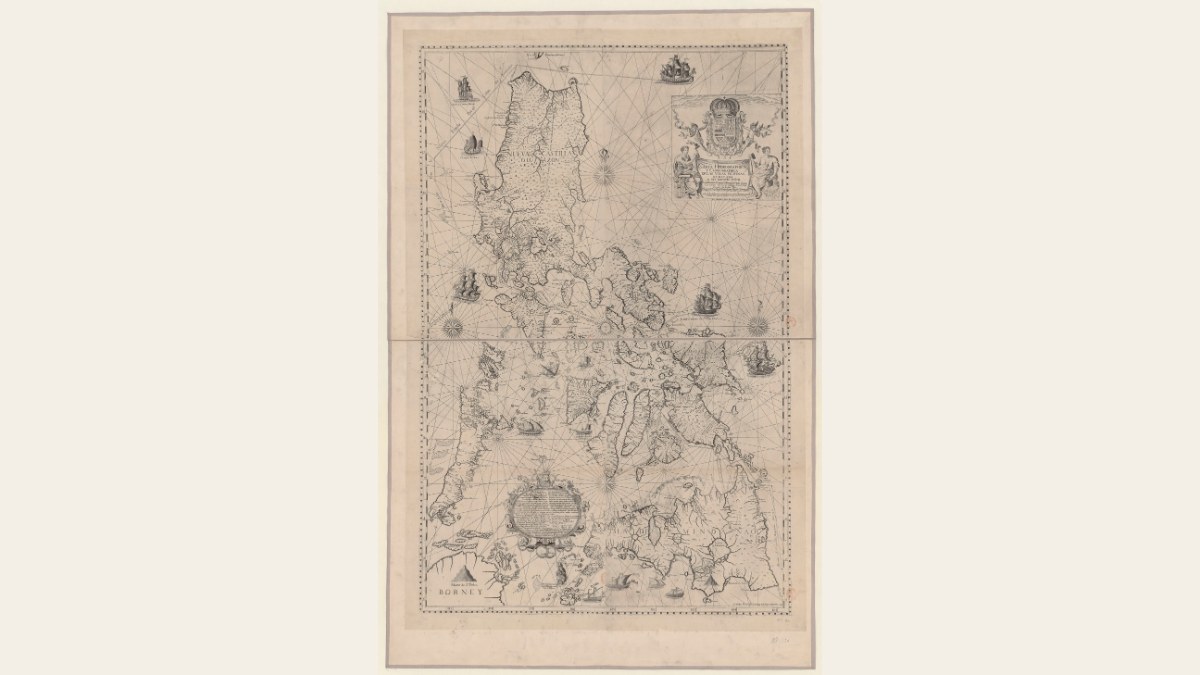
- Image Credits: Section of Carta hydrographica y chorographica de las Yslas Filipinas, Pedro Murillo Velarde, 1734. Source: Wikimedia Commons. License: public domain. Placed on a plain background to fit a standard 16:9 frame, without cropping.
- Contact: Self-portrait, Damián Domingo, about 1830. Source: Wikimedia Commons. License: public domain. Placed on a plain background to fit a standard 16:9 frame, without cropping.
- Simbang Gabi: Photograph of Paco Church, Manila, before it was burned, unknown photographer, Library of Congress collection, 1899. Source: Wikimedia Commons. License: public domain. Placed on a plain background to fit a standard 16:9 frame, without cropping.
- Simbang Gabi (in article): Photograph of the Manila Cathedral nave before a Simbang Gabi Mass, LMP 2001, December 20, 2023. Source: Wikimedia Commons. License: CC BY-SA 4.0. Resized and compressed.
- Simbang Gabi (in article): Photograph of puto bumbong at a Los Angeles market, ChildofMidnight, 2009. Source: Wikimedia Commons. License: CC BY 3.0. Resized and compressed.
- Simbang Gabi (in article): Photograph of bibingka cooking over charcoal, KDCwrites, December 24, 2023. Source: Wikimedia Commons. License: CC BY-SA 4.0. Resized and compressed.
- Filipino Christmas Traditions: Photograph of Zamboanga City Hall lit for Christmas, Zamboguy, December 2008. Source: Wikimedia Commons. License: public domain. Cropped to a standard 16:9 frame and compressed.
- Filipino Christmas Traditions (in article): A mall Christmas tree in Mandaue City, Cebu, already up on October 27, 2024. Photo: Wide Awake!. Source: Wikimedia Commons. License: CC BY 4.0. Resized and compressed.
- Filipino Christmas Traditions (in article): Manila Cathedral, lit with Christmas lights before dawn during Simbang Gabi on December 20, 2024. Photo: LMP 2001. Source: Wikimedia Commons. License: CC BY-SA 4.0. Resized and compressed.
- Filipino Christmas Traditions (in article): A giant lantern lit up at the Giant Lantern Festival (Ligligan Parul) in San Fernando, Pampanga, on December 15, 2012. Photo: Ramon FVelasquez. Source: Wikimedia Commons. License: CC BY-SA 3.0. Resized and compressed.
- Filipino Christmas Traditions (in article): An outdoor belen in Bulakan, Bulacan, sets the Nativity in a Filipino farm, with a nipa hut and a carabao. Photo: Ralff Nestor Nacor. Source: Wikimedia Commons. License: CC BY-SA 4.0. Resized and compressed.
- Filipino Christmas Traditions (in article): A family Noche Buena table on Christmas Eve 2025, under balloons that read “HBD Jesus” (happy birthday, Jesus). Photo: Ralff Nestor Nacor. Source: Wikimedia Commons. License: CC BY-SA 4.0. Resized and compressed.
- Filipino Christmas Traditions (in article): Empty balikbayan boxes for sale at a Filipino shop abroad, this one in suburban Sydney, Australia, in 2024. Photo: OAlexander. Source: Wikimedia Commons. License: CC BY-SA 2.5. Resized and compressed.
- Filipino Christmas Traditions (in article): Children play parlor games at a community Christmas party in December 2014. Photo: Marikka Mampusti. Source: Wikimedia Commons. License: CC BY-SA 4.0. Resized and compressed.
- Filipino Christmas Traditions (in article): A roadside stall selling fireworks on New Year’s Eve, December 31, 2020. Photo: Judgefloro. Source: Wikimedia Commons. License: public domain (CC0). Resized and compressed.
- The Parol: Photograph of glowing Filipino Christmas lanterns, Emman Asuncion Foronda, November 2025. Source: Wikimedia Commons. License: CC BY-SA 4.0. Cropped to a standard 16:9 frame and compressed.
- The Parol (in article): Three lighted parols in the traditional star style, photographed in December 2007. Photo: Eugene Alvin Villar. Source: Wikimedia Commons. License: CC BY-SA 4.0. Resized and compressed.
- The Parol (in article): A simple five-pointed parol made with capiz shells, December 2007. Photo: Eugene Alvin Villar. Source: Wikimedia Commons. License: CC BY-SA 4.0. Resized and compressed.
- The Parol (in article): Parol lanterns along Consunji Street in San Fernando, Pampanga, December 26, 1904. Photo: Luther Parker, Luther Parker Collection, National Library of the Philippines. Source: Wikimedia Commons. License: public domain. Resized and compressed.
- The Parol (in article): A parol maker readies his lanterns for the Christmas season, December 2020. Photo: Richmond Chi. Source: Wikimedia Commons. License: CC BY-SA 4.0. Resized and compressed.
- The Parol (in article): Simple yellow star parols with long tails hang outside a classroom, November 2023. Photo: Iyen.gb. Source: Wikimedia Commons. License: CC BY 4.0. Resized and compressed.
- Filipino Traditions and Celebrations (in article): Big parols already light a road in San Fernando, Pampanga, in September 2022, early in the long Filipino Christmas season. Photo: Potomac1201. Source: Wikimedia Commons. License: CC BY-SA 4.0. Resized and compressed.
- Filipino Traditions and Celebrations (in article): Dancers in the Sinulog street parade honor the Santo Niño in Cebu City, January 15, 2023. Photo: Jumelito Capilot. Source: Wikimedia Commons. License: CC BY-SA 4.0. Resized and compressed.
- Filipino Traditions and Celebrations (in article): A Flores de Mayo procession in Malolos, Bulacan, on May 31, 2023. Photo: SJasminum. Source: Wikimedia Commons. License: CC BY-SA 4.0. Resized and compressed.
- Privacy Policy: “Cuadrillero,” from the Tipos del País watercolors, José Honorato Lozano, 1847. Source: Wikimedia Commons. License: public domain. Placed on a plain background to fit a standard 16:9 frame, without cropping.
Using Our Images
Original images we created may not be reused without permission. Public-domain images can generally be reused freely, and openly licensed images can be reused under the terms of their license, which is linked from the original source. If you would like to use one of our own images, please ask through our Contact page.
Report a Credit Problem
If you believe an image on this site is credited incorrectly, or that we are using an image we shouldn’t, please tell us through our Contact page, and include the page address and the image in question. We will review the report promptly and correct the credit or remove the image, if needed.