Simbang Gabi is a series of nine Masses that Filipino Catholics attend in the days before Christmas, held before dawn each morning from December 16 to 24.
In the United States and Canada, many parishes with Filipino communities hold the novena in the evening instead, commonly from December 15 to 23 or from December 16 to 24, depending on the parish, and it has spread to parishes across both countries.
What Simbang Gabi Means
Simbang Gabi (sim-BANG ga-BI) is Filipino for “night Mass.” It joins simba, which means going to church to pray or attend Mass, and gabi, which means evening or night, with the Tagalog linker -ng tying the two words together.
The name fits the hour, since the Masses begin while it is still dark: in the Philippines, the Mass usually begins around 4:00 a.m., and some churches start as early as 2:30 a.m.
The novena also has a Spanish name, Misa de Gallo, which means “Rooster’s Mass,” after the roosters that crow at dawn. In the Philippines, Misa de Gallo is commonly used for the whole series, though some use it only for the final dawn Mass on December 24.
In Spain and much of the Spanish-speaking world, the same name traditionally means the Midnight Mass on Christmas Eve, a separate celebration. These Masses are also known as the Misas de Aguinaldo, from aguinaldo, the Spanish word for a Christmas gift.
Where Simbang Gabi Comes From
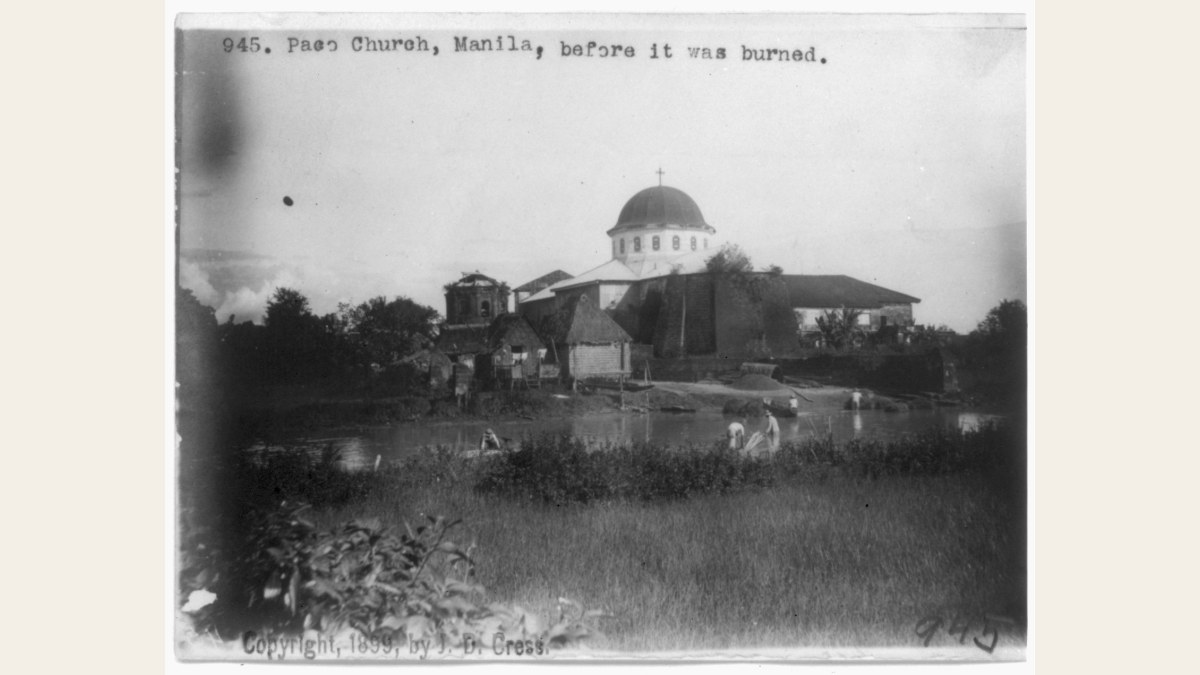
Simbang Gabi began during the Spanish colonial period.
Some sources, including Philstar and Wikipedia, date it to 1669, though accounts differ: the Diocese of Brooklyn’s Filipino apostolate says Spanish friars introduced it in the 16th century, and Catholic News Agency describes the tradition in the Philippines as dating to the 17th century.
The custom has roots in Mexico. According to the Archdiocese of Vancouver’s account, it traces back to 16th-century Mexico, where a friar, Diego de Soria, is said to have received Vatican permission to celebrate Christmas Mass outdoors at dawn.
The practice was carried to the Philippines, where it took on a local shape.
Why so early in the morning? A common explanation is practical.
In farming communities, people began work in the fields before sunrise, so a Mass before dawn let them worship and still put in a full day’s work. The Diocese of Brooklyn notes that the Holy See permitted these dawn Masses in the 1600s to accommodate farmers and fishermen.
Because a dawn Christmas novena was a special arrangement, it needed the Church’s continued permission. In 1953, the First Plenary Council of the Philippines asked the Holy See to continue it, and, in 1961, the Vatican granted that request.
What Happens at Simbang Gabi
Simbang Gabi is a novena, a nine-day series of prayers, and it is offered in honor of the Virgin Mary in preparation for Christmas. Each day brings a full Mass, usually celebrated in a church decorated with parols (singular parol, pa-ROL), the star-shaped Filipino lanterns that recall the Star of Bethlehem.
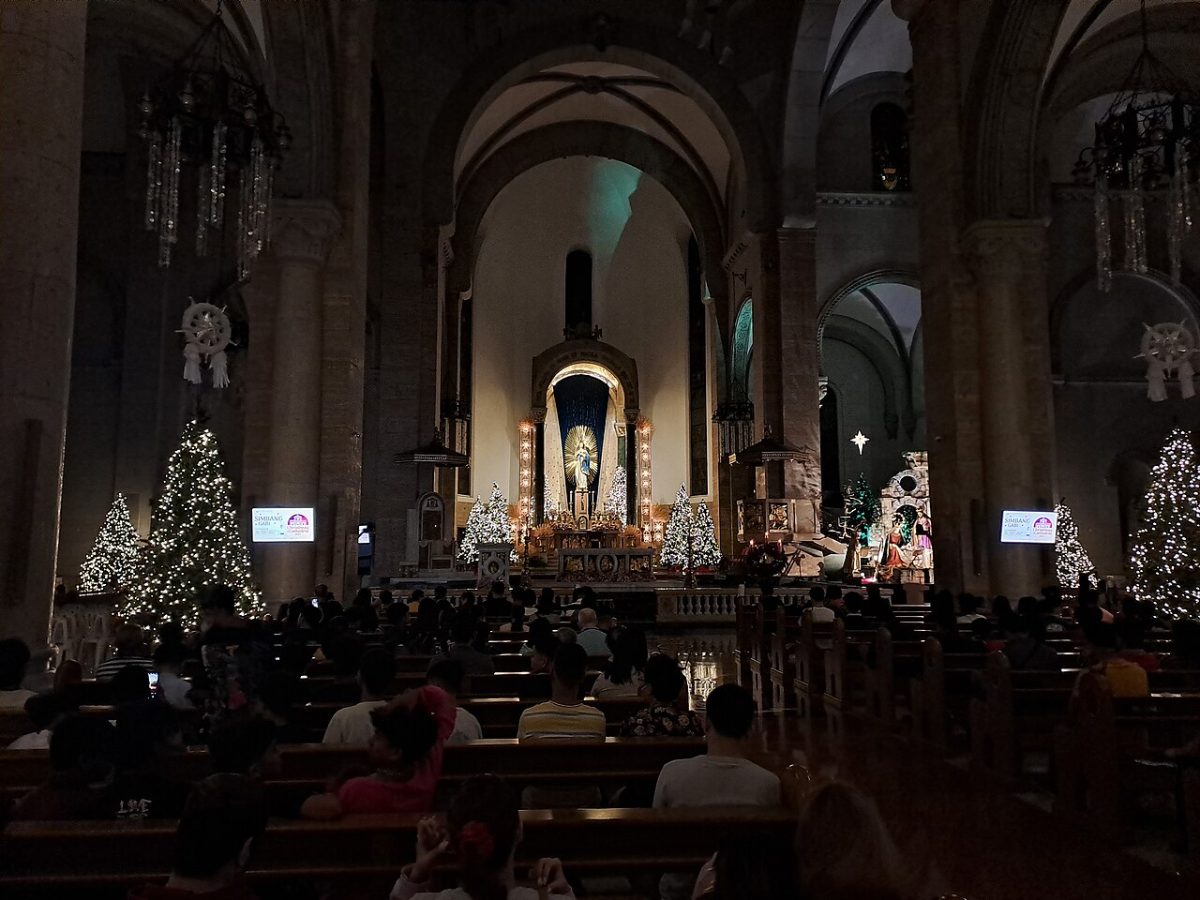
Counting back nine days from Christmas Eve is why the novena begins on December 16. Although the Masses fall in Advent, when priests usually wear purple and the Gloria is left out, Simbang Gabi Masses are celebrated in white and the Gloria is sung.
Many Filipinos hold a well-known folk belief that a person who completes all nine Masses may have a wish or prayer request granted. It is a popular belief, not a teaching of the Church.
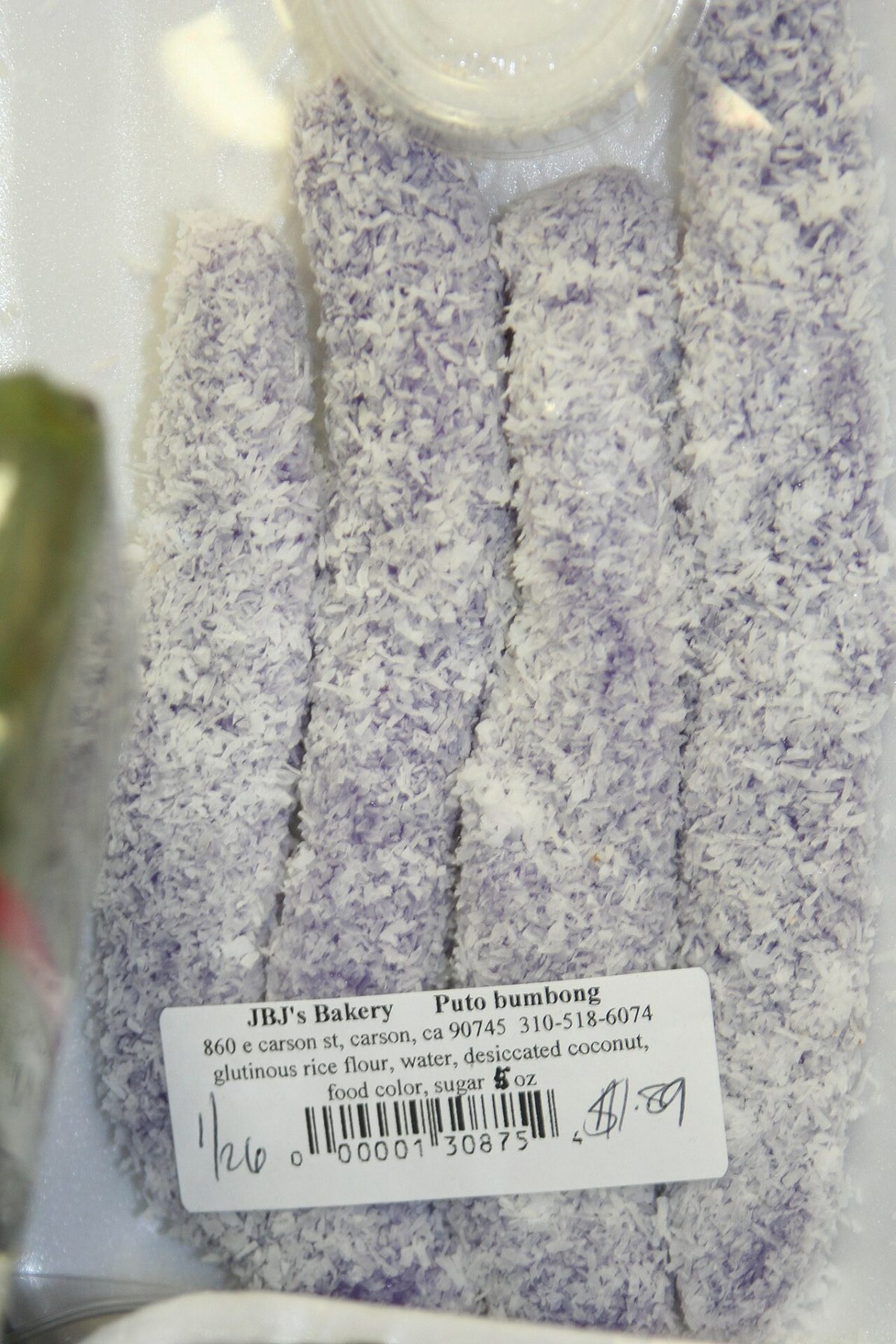
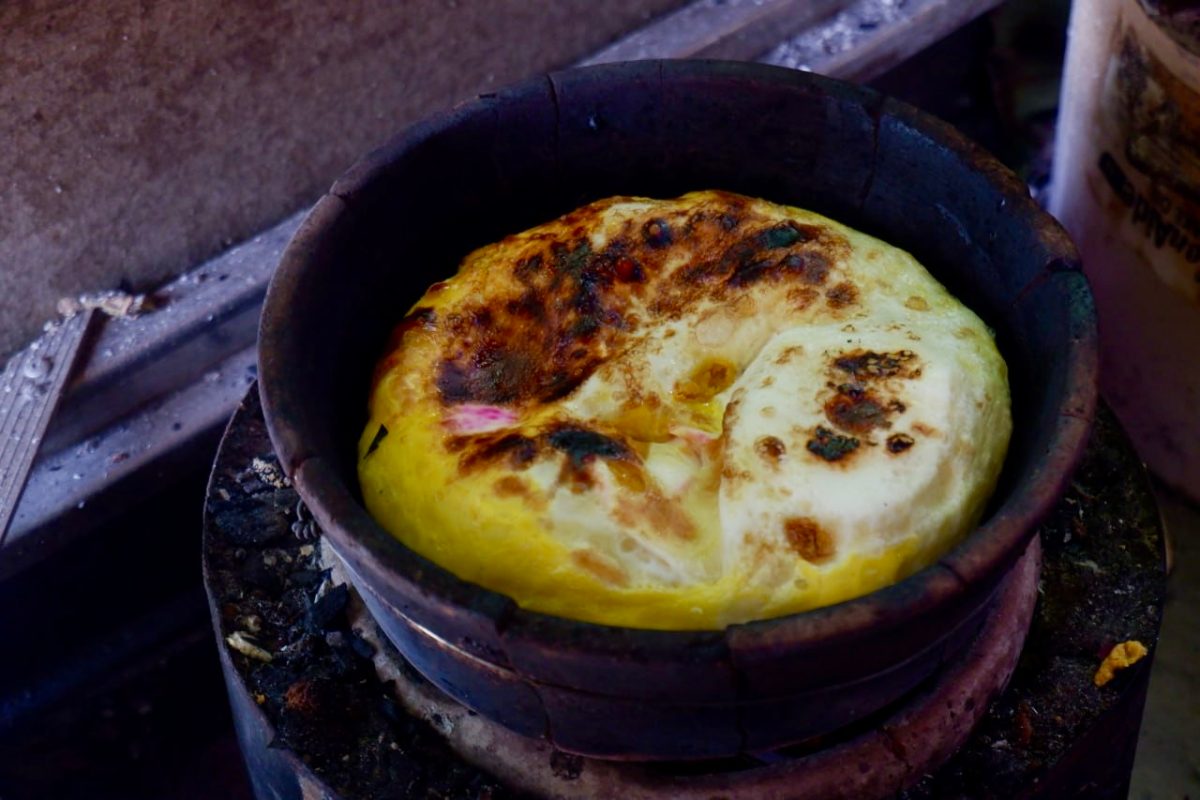
Food is part of the experience, too. After Mass, many churchgoers buy a snack of bibingka (bi-bing-KA), a rice cake cooked with heat from above and below, and puto bumbong (PU-to bum-BONG), a purple rice cake steamed in bamboo tubes.
These are often paired with tsokolate (tso-ko-LA-te), a thick hot chocolate, or salabat (sa-la-BAT), a ginger tea.
Evening Masses: The Anticipated Simbang Gabi
Not every Simbang Gabi Mass happens at dawn. In the Philippines, many churches also offer anticipated Masses the evening before, running from December 15 to 23.
Starting times vary by parish, from the early evening to as late as midnight.
Simbang Gabi in the United States
Filipino Americans have brought Simbang Gabi to parishes across the country, and, in the United States, it is mostly held on the evening schedule.
In 2024, OSV News reported that the Archdiocese of Chicago listed 55 parishes celebrating Simbang Gabi Masses, and that the Diocese of Richmond had more than 32 Simbang Gabi Masses on its schedule.
The tradition is well established on the West Coast. A 2017 Inquirer report found that nearly a hundred parishes in the Diocese of Oakland took part in a special Mass held before the novena, and that about 60 parishes in the Archdiocese of Seattle were taking part that year.
Some parish groups have kept it going for decades: Our Lady of Good Counsel in San Leandro, California, had been holding its Masses at night since 2001, and a group at Mary Queen of Peace in Sammamish, Washington, since 1998.
On the East Coast, several parishes in Brooklyn and Queens host nine evenings of Simbang Gabi, and the Diocese of Brooklyn’s liturgy office has issued guidelines for parishes that hold it.
In Manhattan, the Philippine Consulate General hosts Simbang Gabi sa Konsulado at the Philippine Center, a tradition that marked its 37th year in 2025. During the novena, one of nine parols is lit each evening.
Across the country, many parishes hold a gathering after Mass in the church hall, where families share Filipino dishes, sometimes including a roasted pig.
Simbang Gabi in Canada
In Canada, Simbang Gabi is celebrated in parishes across the country, often in the evenings from December 15 to 23, though schedules vary by parish. According to the Archdiocese of Vancouver, its Simbang Gabi celebrations began at Corpus Christi Parish in 2001.
In 2023, Archbishop Miller invited all Catholics in the archdiocese, whatever their background, to take part, and the celebration there opened with a Mass at Holy Rosary Cathedral the night before the novena began, including a procession and blessing of parols. Parishes in Toronto and Edmonton hold the novena, too.
In Toronto, a 2018 Catholic Register report described how Fr. John Sullivan worked with Filipino parishioners at Our Lady of Lourdes to bring the tradition to their community.
Simbang Gabi at the Vatican
On December 15, 2019, Pope Francis celebrated Simbang Gabi in St. Peter’s Basilica, with Rome’s Filipino community. Catholic News Agency reported that it was the first time a pope had celebrated Simbang Gabi at the Vatican.
In his homily, the pope encouraged Filipino migrants to let their faith be a “leaven” in the parish communities they now belong to.
When Is Simbang Gabi in 2026?
In 2026, the traditional dawn Masses run from Wednesday, December 16, to Thursday, December 24. Evening Masses in the United States and Canada commonly run from Tuesday, December 15, to Wednesday, December 23, while some parishes hold them from December 16 to 24 or keep a morning schedule.
Schedules vary by parish, so check your parish bulletin or diocesan website for exact times.
Related Traditions
Simbang Gabi opens the busiest stretch of the Filipino Christmas season, which is often described as the longest in the world.
It leads into Noche Buena (NO-che BWE-na), the family feast held around midnight on Christmas Eve, and it shares its symbols with the parol, which has long been linked to the dawn Masses.
Frequently Asked Questions
These are common questions about Simbang Gabi, with short answers drawn from the sources listed below.
How Many Masses Are in Simbang Gabi?
There are nine Masses, one each day. In the Philippines, the dawn Masses run from December 16 to 24, and the anticipated evening Masses run from December 15 to 23.
Do You Have to Be Filipino to Attend Simbang Gabi?
No. Simbang Gabi is a Catholic Mass, and people of any background are welcome to attend. In Vancouver, the archbishop has specifically invited Catholics of every cultural background to take part.
As at any Catholic Mass, Holy Communion is generally reserved for Catholics.
What Happens If You Miss a Night?
Each night is its own Mass, and attending is voluntary, so you can still go to the remaining nights.
Completing all nine is a traditional act of devotion, and a popular folk belief holds that doing so may bring a granted wish or prayer request, but that is not a teaching of the Church.
Why Is Simbang Gabi Held at Dawn?
The usual explanation is that farmers in the Spanish colonial Philippines started work before sunrise, so a Mass before dawn let them attend and still work a full day.
What Food Is Served After Simbang Gabi?
In the Philippines, the classic pairing is bibingka or puto bumbong with hot chocolate or ginger tea. In North America, parishes often hold a meal in the church hall after Mass.
Sources
- “Simbang Gabi.” Wikipedia. Accessed November 28, 2026.
- “Simbang Gabi (Misa de Gallo).” Diocese of Brooklyn, Filipino Apostolate. Updated December 6, 2024.
- Dolly Dy-Zulueta. “Christmas in the Philippines: Why Simbang Gabi Is an Important Filipino Tradition.” Philstar.com, December 15, 2023.
- Simone Orendain. “Filipino Simbang Gabi Masses More and More Rooted in the US.” OSV News, published in the Catholic Review, December 22, 2024.
- “Simbang Gabi, a Filipino Christmas Gift to US Parishes.” Inquirer USA, December 20, 2017.
- “Archbishop Invites All Faithful to Embrace Filipino Simbang Gabi Tradition.” The B.C. Catholic, December 15, 2023.
- “Simbang Gabi Adds Filipino Flare to Feast.” The Catholic Register, December 20, 2018.
- Deacon Gem Mella. “Simbang Gabi Is a Filipino Christmas Tradition Honouring the Blessed Mother.” Catholic Archdiocese of Edmonton, December 23, 2024.
- Courtney Mares. “Pope Francis Celebrates a Filipino Christmas Tradition at the Vatican.” Catholic News Agency, December 15, 2019.
- Pope Francis. Homily at Holy Mass for the Filipino Community, Vatican Basilica, December 15, 2019. Vatican.va.
- R.C. Ladrido. “The Visual Delight of the Filipino Parol.” VERA Files, December 12, 2022.
- “Christmas in the Philippines” and “Parol.” Wikipedia. Accessed November 28, 2026.
- “Simba,” “gabi,” and “Simbang Gabi.” Wiktionary, Tagalog entries. Accessed November 28, 2026.
- “Simbang Gabi sa Konsulado Returns to New York for 37th Year, Uniting Filipino Community in Peace and Hope.” Philippine Consulate General in New York, December 14, 2025.
- “Filipino Christmas Kicks Off in New York with Simbang Gabi, Parols.” Philippine Department of Foreign Affairs, December 4, 2020.