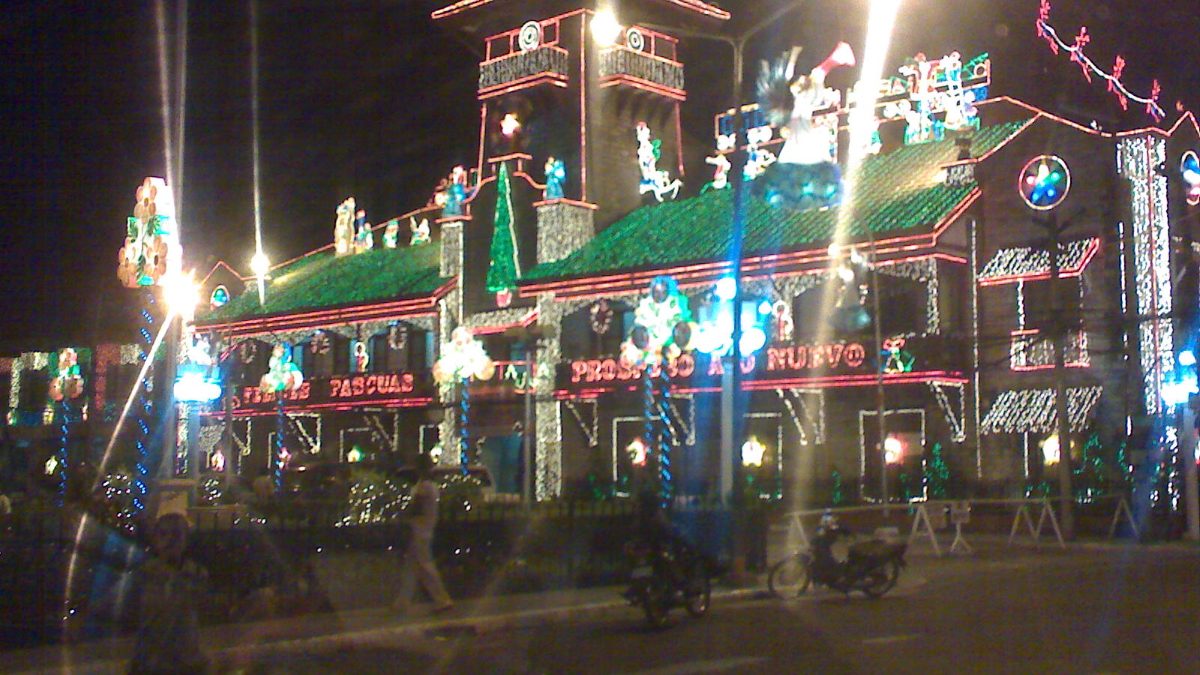
Filipino Christmas traditions stretch across a popular season that starts in September and lasts into January, and the Philippines is often described as having the longest Christmas season in the world.
Its best-known customs include the nine Masses of Simbang Gabi, the star-shaped parol lantern, Christmas parties with monito-monita gift exchanges, the late-night Noche Buena feast, and Christmas Day visits to godparents.
Many of them reflect the country’s Catholic heritage, celebrations vary by region, religion, and family, and Filipino families in the United States and Canada keep many of them alive.
What Christmas Is Called in Filipino
Christmas in Filipino is Pasko (pas-KO), from the Spanish pascua. The word goes back through Latin and Greek pascha to the Hebrew pesach, Passover; it came to mean Easter, and Spanish also uses it for the other great feasts, especially Christmas, as in the greeting ¡Felices Pascuas!
To wish someone a merry Christmas, you say Maligayang Pasko (ma-li-GA-yang pas-KO), where maligaya means merry or happy.
Many of the season’s other words, such as Noche Buena, aguinaldo, and belen, also come from Spanish, a reminder of the Spanish colonial period, when many of these customs took shape.
The “Ber” Months: When the Season Starts
The Filipino Christmas season begins gradually in September, at the start of what Filipinos call the “ber” months: September, October, November, and December, named for the ending they share.
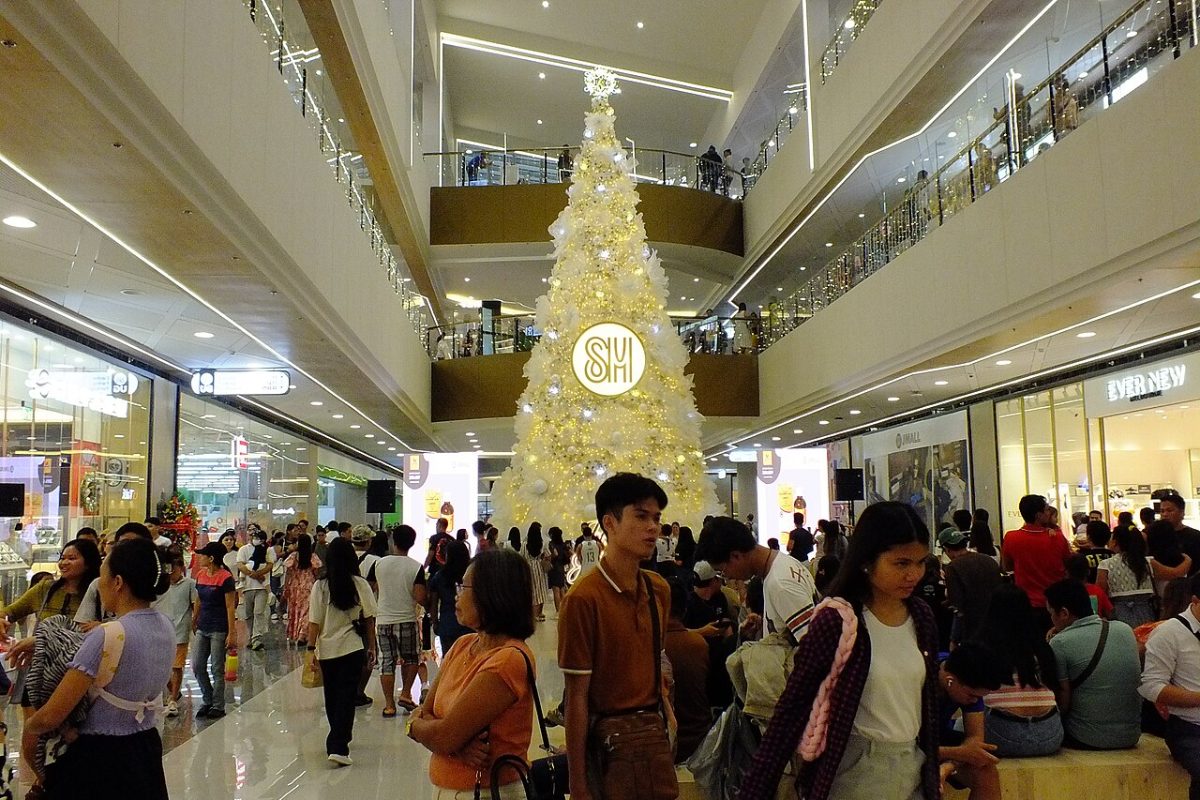
A University of the Philippines professor told CNBC in 2021 that “Christmas fever starts on Sept. 1,” and the Manila Bulletin describes September 1 as the opening of a four-month season of festivities.
According to the same CNBC report, Filipinos start making parols as early as September. The celebrations build over the following months and reach their peak in December.
The season also has a soundtrack. From September 1, “Christmas in Our Hearts,” the 1990 hit that Jose Mari Chan wrote with Rina Cañiza and recorded with his daughter Liz, becomes a familiar sound in malls, on jeepneys, and on the radio.
Chan’s place in the season has inspired a much-loved online joke. As September arrives, social media fills with memes of Chan peeking around a corner or the edge of a photo, as if he is getting ready to come out again for another Christmas.
Chan is in on the joke. In a 2022 interview, he said the memes make him proud, because he thinks of his songs as his children, and he reminds fans that the real reason for Christmas is the birth of Jesus.
When the Season Ends
For many Filipino families, the Feast of the Epiphany, better known as Three Kings’ Day, in early January traditionally marks the end of Christmas festivities, although, in the Church calendar, the Christmas season runs a little longer, to the Feast of the Baptism of the Lord.
In many places, popular celebrations continue until the Feast of the Santo Niño, the Holy Child Jesus, on the third Sunday of January. From September into January, that adds up to more than four months.
Simbang Gabi: Nine Dawn Masses
For many Filipino Catholics, the religious heart of the season is Simbang Gabi (sim-BANG ga-BI), which means “night Mass,” a series of nine Masses traditionally held before dawn from December 16 to 24. Many churches in the Philippines also offer anticipated evening Masses from December 15 to 23.
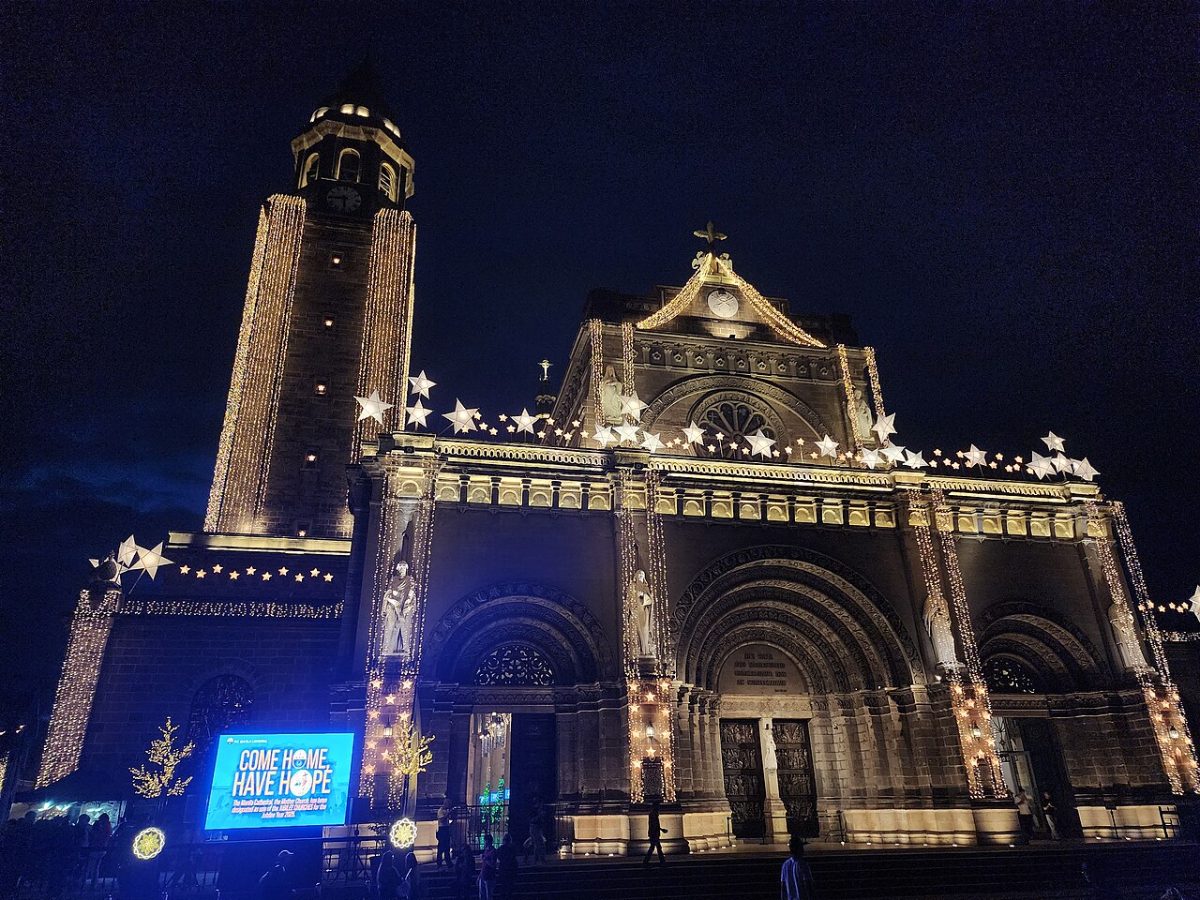
The nine days form a novena, a traditional nine-day series of prayers, leading up to Christmas. The dawn Masses are also called Misa de Gallo, Spanish for “rooster’s Mass,” because they begin around the hour roosters crow.
Many Filipinos believe that completing all nine may bring a special blessing or the granting of a wish, though this is a popular belief, not a teaching of the Church. After Mass, churchgoers often eat bibingka and puto bumbong, two kinds of rice cake, with hot chocolate or ginger tea.
In the United States and Canada, many parishes with Filipino communities hold Simbang Gabi in the evening, commonly from December 15 to 23, while some keep the December 16 to 24 dates or a morning schedule, and the tradition has spread to parishes across both countries.
Our full guide to Simbang Gabi explains its history and how it is celebrated in North America.
The Parol: The Filipino Christmas Star
The parol (pa-ROL) is a lantern, usually shaped like a five-pointed star, that represents the Star of Bethlehem, and it is a central symbol of a Filipino Christmas. Its name comes from the Spanish farol, meaning lantern.
Before electricity, candle-lit lanterns lit the way for people walking to the dawn Masses. Traditional parols are made of bamboo and Japanese paper, often with two paper tails, while modern ones may use plastic, metal, capiz shells, and electric lights.
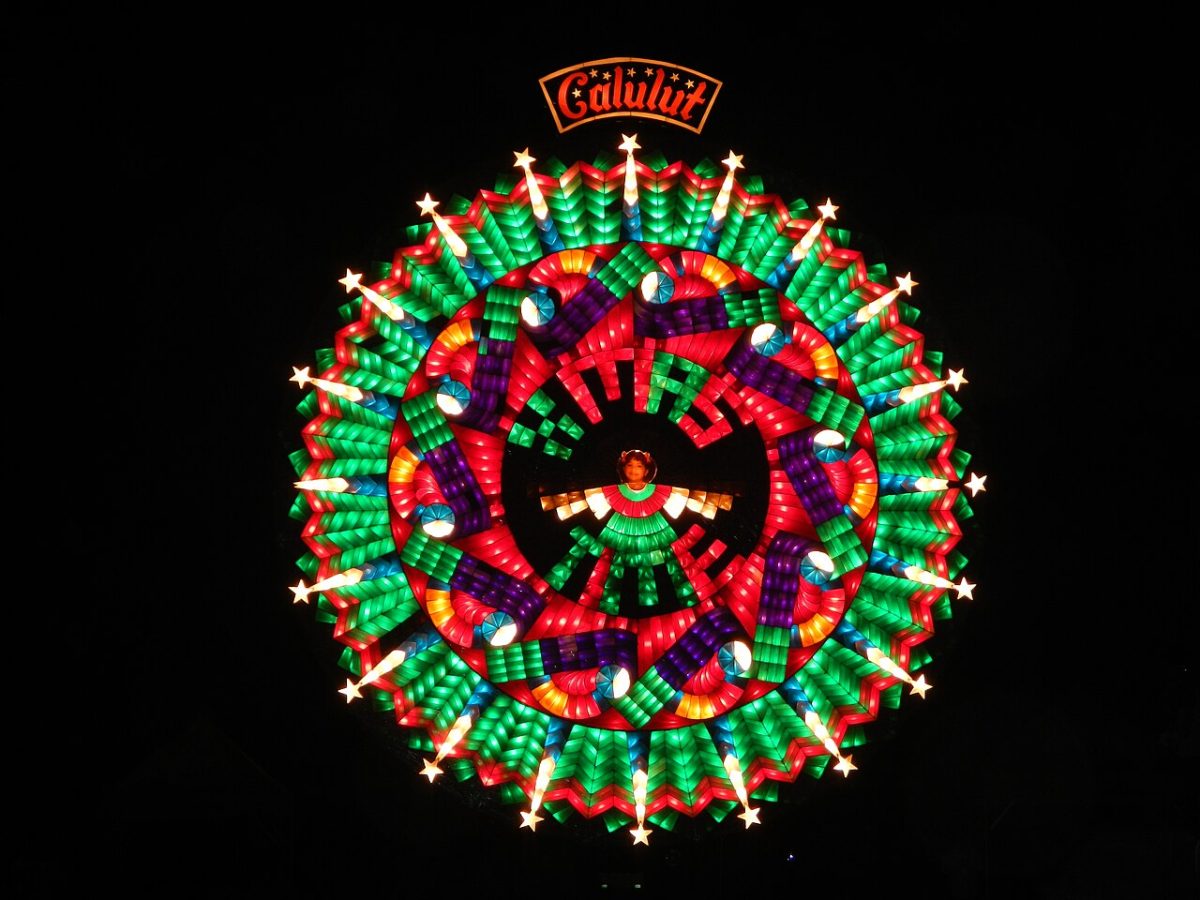
Parols hang outside homes and in churches, and they have become symbols of Filipino identity for communities overseas. The city of San Fernando in Pampanga, nicknamed the “Christmas Capital of the Philippines,” holds a Giant Lantern Festival each December, where enormous electric parols compete.
The festival grew out of the lubenas, religious processions in Bacolor, the old provincial capital, in which each barrio carried small bamboo lanterns to church. The capital moved to San Fernando in 1904, and the lantern contest there is dated to 1904 or 1908.
Electric lights arrived in 1931, and, over the decades, the lanterns grew into giants about 20 feet across. Today, each carries thousands of bulbs that flash in patterns as lantern makers turn large steel barrels, called rotors, by hand.
Kapampangan historian Robbie Tantingco has said that, according to oral accounts, the prewar festival ended with participants using their bamboo poles to smash the losing lanterns. Only the winner was left untouched.
Our guide to the parol covers its history and how to make one.
The Belen: The Nativity Scene
A belen (be-LEN) is a nativity scene showing the birth of Jesus, and the word comes from the Spanish name for Bethlehem.
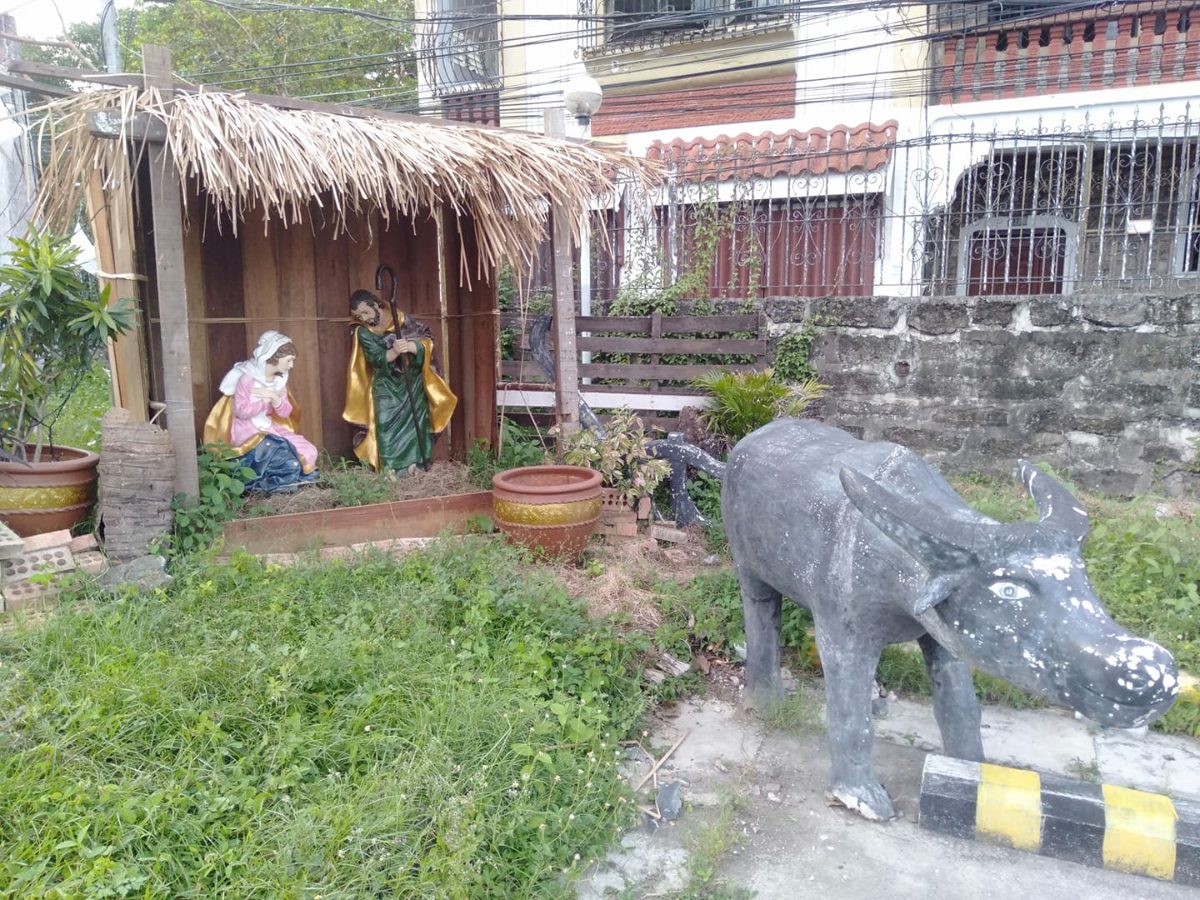
Many families set one up in the living room, often beneath the Christmas tree, from small tabletop sets to elaborate scenes with figures of plaster, carved wood, or resin. Churches, schools, and town plazas display larger ones.
Tarlac province hopes to be known as the Belen Capital of the Philippines. Since 2007, its Belenismo sa Tarlac contest has filled town halls, plazas, and churches with Nativity scenes, many built from recycled and local materials such as abaca, banana bark, coconut shells, and glass bottles.
Panunuluyan: Searching for Room at the Inn
On Christmas Eve, some parishes and towns stage the Panunuluyan (pa-nu-nu-LU-yan), a sung reenactment of Joseph and Mary’s search for shelter in Bethlehem. Its name is often translated as “seeking entry.”
Depending on the place, costumed actors or statues of the couple on a decorated float go from house to house. Singers perform Joseph and Mary’s pleas and the replies of the householders who turn them away, sometimes with a brass band following.
The search ends when the couple finds shelter at a stable or Nativity scene by the church, and, in some parishes, the play becomes part of the Christmas Eve Mass. The custom has regional names, including Panawagan in some Tagalog provinces and Kagharong in Bicol.
Historians have linked it to Las Posadas, a similar Mexican Christmas reenactment that likely reached the Philippines through the Manila-Acapulco galleon trade. In December 2012, the Philippine Center in New York hosted nine nights of Panunuluyan, with versions in Waray and Ilocano.
Caroling From House to House
Caroling is a familiar sound of the season. Groups of carolers, often children, go from house to house, singing Christmas songs, and are given coins or small gifts.
Caroling is one part of pamamasko, the Tagalog name for the custom of making Christmas visits to offer greetings and receive gifts.
Children announce themselves with “Namamasko po!” and often bring homemade instruments, such as tambourines of flattened bottle caps, called tansan, and drums made from empty cans. A household with nothing to give may answer politely, “Patawad po,” asking the carolers’ pardon.
A favorite carol is “Ang Pasko ay Sumapit,” sung to the melody of “Kasadya Ning Taknaa,” a 1933 Cebuano song by composer Vicente Rubi and lyricist Mariano Vestil. National Artist Levi Celerio later wrote the Tagalog lyrics.
Christmas Parties, Monito-Monita, and the 13th-Month Pay
December fills with Christmas parties at offices, parishes, and neighborhood associations, and among old classmates. At school, children decorate their classrooms, bring food from home, play games, and exchange gifts before the Christmas break.
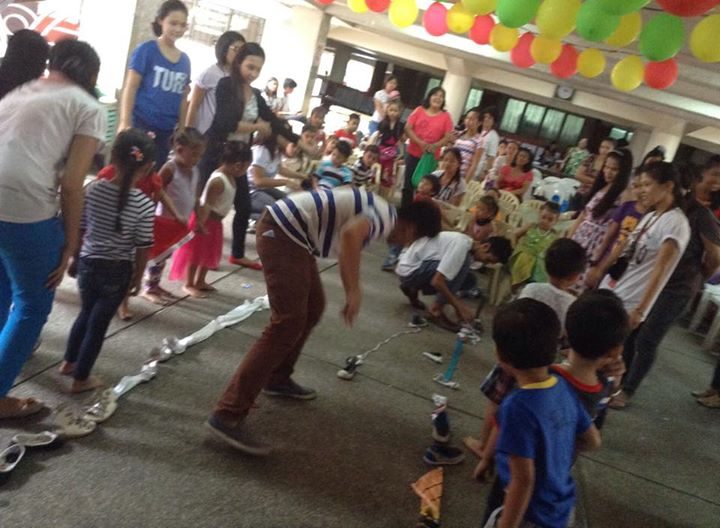
Office parties follow a familiar script. Each department may perform a song, dance, or skit, sometimes for a prize, and there are games such as Trip to Jerusalem (musical chairs), Bring Me, and Pinoy Henyo, plus a raffle whose grand prize might be cash or an appliance.
Many parties include monito-monita (mo-NI-to mo-NI-ta), the Filipino version of Secret Santa, also called manito-manita or Kris Kringle. Each person draws a name from a bowl and buys a gift within an agreed price range; a male recipient is the monito and a female one the monita.
In some groups, the game runs for weeks, with a small gift each week on a theme such as “something sweet,” “something soft,” or the oddly specific “something fluffy that smells good.” The givers are revealed at the party.
Helping to pay for the season is the 13th-month pay. Under Presidential Decree No. 851 of 1975, rank-and-file private-sector employees who have worked at least a month in the year must receive at least one-twelfth of their basic salary for the year, no later than December 24.
Unlike a Christmas bonus, it is required by law. For many workers, it helps cover Noche Buena groceries, presents, and aguinaldo for godchildren, while others use it for bills, tuition, savings, or debts.
Noche Buena: The Christmas Eve Feast
Noche Buena (NO-che BWE-na), from the Spanish name for Christmas Eve, is the family feast held around midnight on Christmas Eve, often after the Christmas Eve Mass, though some families gather earlier in the evening.
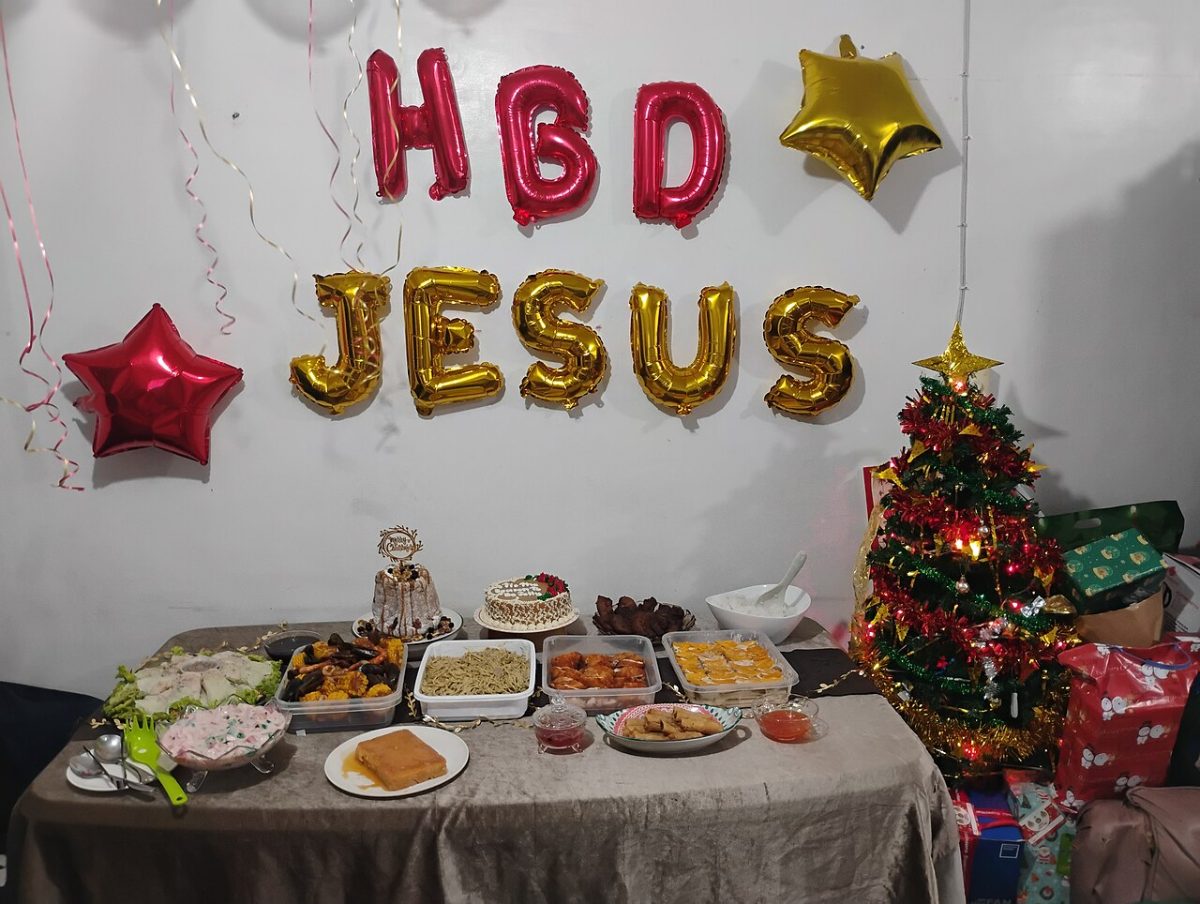
The centerpiece is often hamon, a Christmas ham glazed with pineapple juice and sugar, served with queso de bola, a ball of Edam cheese in red wax. Depending on the family and the budget, there may also be lechon, a whole roast pig, or roast or fried chicken.
Other favorites include Filipino-style spaghetti with a sweet sauce and sliced hot dogs, pancit noodles, lumpiang shanghai (small fried meat spring rolls), macaroni salad, leche flan, rice cakes, and a fruit salad of canned fruit cocktail, cream, and condensed milk.
For Noche Buena recipes, see our sister site, lutongpinoy.com.
Christmas Day, Godparents, and Aguinaldo
Christmas Day, or Araw ng Pasko, is primarily a family affair. Children and younger relatives greet their elders with the mano (MA-no), taking an elder’s hand and pressing the back of it to their forehead, while saying mano po, a respectful gesture that asks for the elder’s blessing.
It is done all year, but it is especially common during Christmas family visits.
Godparents play a special part. On Christmas Day, children traditionally visit their godparents and older relatives, and it is customary for a ninong (NI-nong, godfather) or ninang (NI-nang, godmother) to give aguinaldo (a-gi-NAL-do), a Christmas gift, to their godchildren.
The word is also spelled aginaldo in Filipino.
New Year and Three Kings’ Day
The celebrations continue past Christmas. On New Year’s Eve, families gather for Media Noche (MED-ya NO-che), Spanish for “midnight,” another late-night feast.
The table is set for luck. Many families display 12 kinds of round fruit, one for each month, or 13 for extra luck, because their coin-like shapes stand for prosperity, while pancit stands for long life and sticky rice cakes for good fortune that sticks.
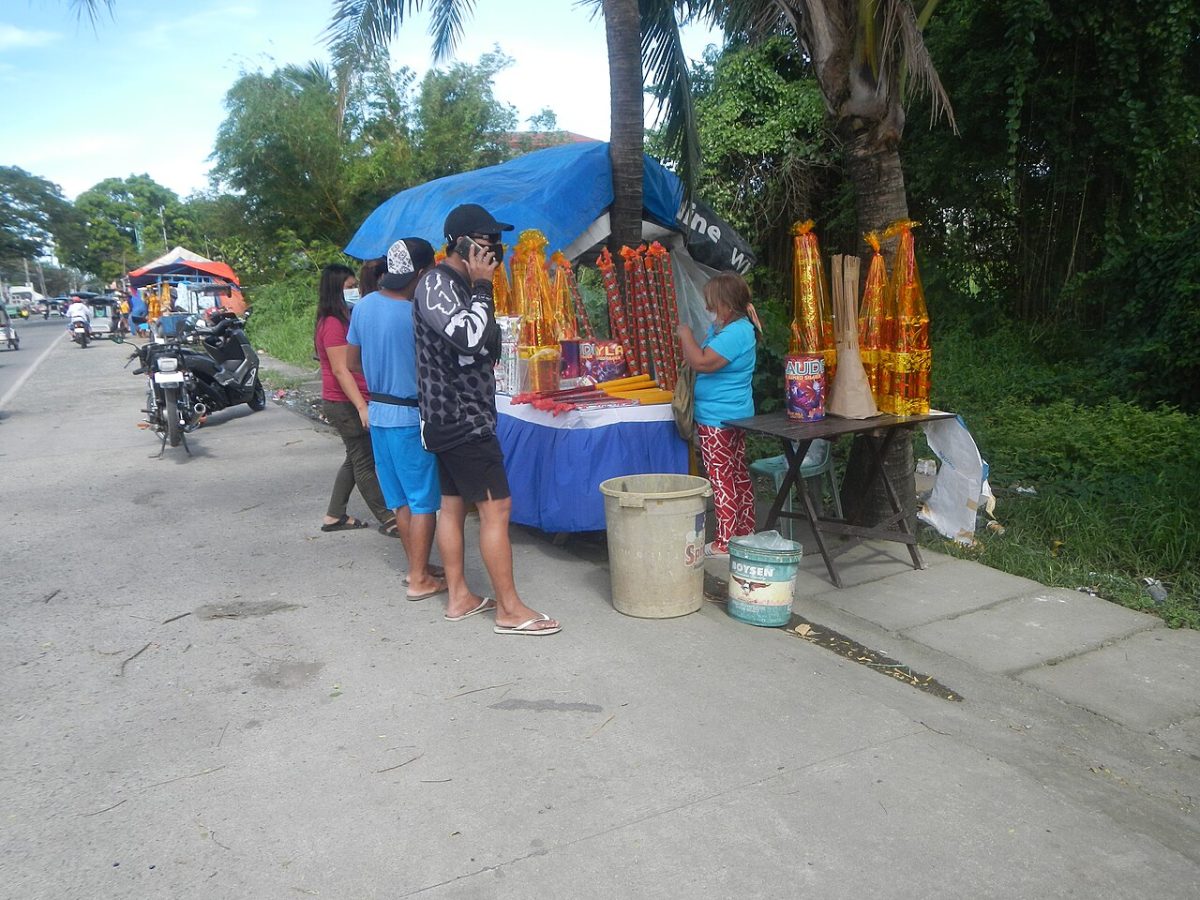
At midnight, families bang pots and pans, and blow horns called torotot, to drive away bad luck, while children jump as high as they can in the hope of growing taller. Firecrackers have long been part of the noise, though, since 2017, national rules have largely limited them to community fireworks displays.
Many people also wear polka dots, keep coins in their pockets, and open the doors and windows to let good fortune in.
For many families, the festivities wind down with Three Kings’ Day in early January, though popular celebrations can last until the Feast of the Santo Niño later in the month.
Filipino Christmas in the United States and Canada
Filipino families in North America adapt the season to new surroundings. Simbang Gabi usually moves to the evening, and, in 2024, the Archdiocese of Chicago alone listed 55 parishes celebrating it.
Churches hang parols, and parish halls fill with Filipino food after Mass.
Canada has its own traditions. Simbang Gabi is now celebrated in parishes across the country, usually in the evening from December 15 to 23, and, in Vancouver, where it began at Corpus Christi Parish in 2001, the archbishop has called the novena a gift from the Filipino community.
In New York, the Philippine Consulate General has hosted Simbang Gabi sa Konsulado for more than three decades, and organizers light one of nine parols each evening of the novena.
The season also connects families across borders. CNBC’s 2021 report on the season highlighted the return of the balikbayan (ba-lik-BA-yan), Filipinos coming home from abroad.
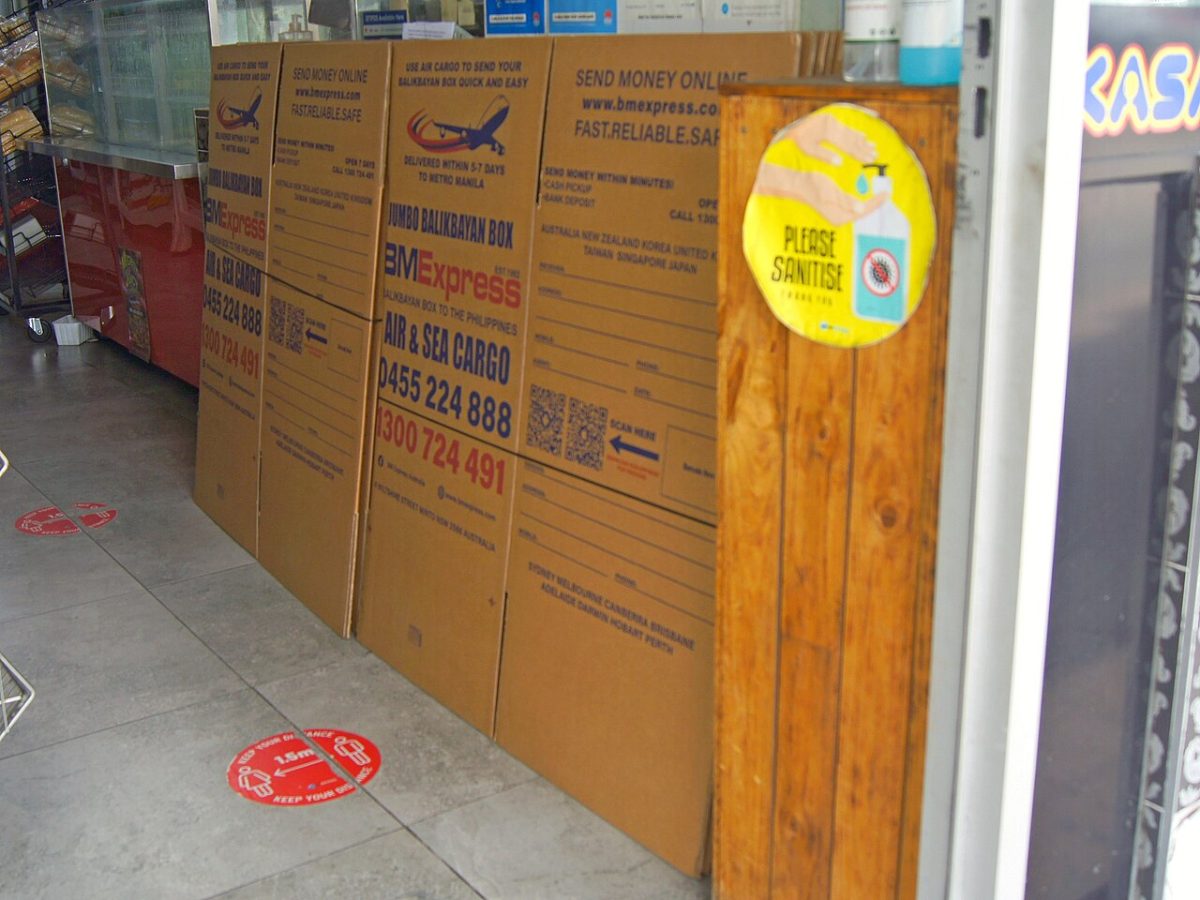
Families abroad also send Christmas home in a balikbayan box, a large carton of gifts, food, and household goods for relatives in the Philippines. Boxes sent by sea from the United States or Canada can take two to three months, so many families ship theirs by September or October.
Typical contents include chocolates, canned goods, toiletries, clothes, and toys, within Philippine customs rules. In 2014, estimates attributed to the Bureau of Customs put the number at about 5.5 million boxes a year, about 40 percent of them arriving from September to December.
One Filipino interviewed by VERA Files in 2012 said that, while he lived overseas, it was the parol, not the Christmas tree, that reminded him of home.
Frequently Asked Questions
These are short answers to common questions about Filipino Christmas, drawn from the sources listed below.
When Does Christmas Start in the Philippines?
The season starts gradually in September, at the beginning of the “ber” months, and builds to a peak in December. Some families start making parols as early as September.
Why Is the Filipino Christmas Season So Long?
It begins with the “ber” months in September and continues through the January feasts of Three Kings’ Day and the Santo Niño, so it spans more than four months.
What Do Filipinos Eat on Christmas Eve?
The Noche Buena table usually includes ham, roasted meats, rice cakes, desserts, and queso de bola, an Edam cheese in red wax.
What Is Aguinaldo?
Aguinaldo, also spelled aginaldo, is a Christmas gift. At Christmas, it often means the money or presents children receive from their godparents and older relatives.
What Is Monito-Monita?
Monito-monita is the Filipino version of Secret Santa. Each person draws a name and gives that person a gift, sometimes a series of small themed gifts over several weeks, and the givers are revealed at a Christmas party.
What Is the 13th-Month Pay?
It is a payment required by Philippine law for rank-and-file private-sector employees, equal to at least one-twelfth of their basic salary for the year. Employers must pay it by December 24, so many families use it for Christmas.
How Do You Say Merry Christmas in Filipino?
You say Maligayang Pasko (ma-li-GA-yang pas-KO).
Sources
- “Christmas in the Philippines.” Wikipedia. Accessed November 28, 2026.
- Monica Buchanan Pitrelli. “The Country That Celebrates Christmas for More Than 4 Months a Year.” CNBC, December 21, 2021.
- “The ‘Ber’ Months Are Here, Bringing Good Tidings.” Manila Bulletin, September 1, 2021.
- Christian Borbon. “Philippines Christmas Season Starts in September with Jose Mari Chan’s Music.” Gulf News, September 1, 2025.
- Franchesca Viernes. “Jose Mari Chan on Memes When Ber Months Come: ‘I Feel Proud.'” GMA News, September 1, 2022.
- “Simbang Gabi” and “Parol.” Wikipedia. Accessed November 28, 2026.
- “Giant Lantern Festival.” Wikipedia. Accessed November 28, 2026.
- Simone Orendain. “Filipino Simbang Gabi Masses More and More Rooted in the US.” OSV News, published in the Catholic Review, December 22, 2024.
- Norman Sison. “The Philippine Parol and the Mexican Connection.” VERA Files, December 24, 2012.
- R.C. Ladrido. “The Visual Delight of the Filipino Parol.” VERA Files, December 12, 2022.
- “Pasko,” “Maligayang Pasko,” “belen,” “aginaldo,” “ninong,” “ninang,” “mano,” “Noche Buena,” and “medyanotse.” Wiktionary, Tagalog entries. Accessed November 28, 2026.
- James Relativo. “DOLE Reminds Employers: Release 13th Month Pay Before Christmas.” Philstar, November 11, 2023.
- Executive Order No. 28, s. 2017, “Providing for the Regulation and Control of the Use of Firecrackers and Other Pyrotechnic Devices.” Office of the President of the Philippines, June 20, 2017.
- Jove Moya. “Filipino Christmas Jargons for Expats: 5 Pinoy Words You Need to Know.” Tatler Asia, November 29, 2021.
- Yasunari Ramon Taguchi and Jen Vega. “The Manito and the Manita.” The Freeman, November 6, 2013.
- “Usual Things That We Encounter at Office Christmas Parties.” GMA News, November 22, 2019.
- Maricel Eballo, Esmeralda Fortunado-Sanchez, and Arnulfo Valderama Fortunado. “Filipino Catholics Reenact Christmas Story on Noche Buena.” Catholics & Cultures, College of the Holy Cross, 2015.
- Ambeth Ocampo. “Panunuluyan.” Looking Back, Inquirer Opinion, December 24, 2014.
- “Panunuluyan: Reviving a Filipino Christmas Tradition in New York.” Inquirer Global Nation, December 24, 2012.
- Jarius Bondoc. “Christmas in Our Isles, a Long Enduring Feast.” The Philippine Star, December 22, 2021 (first published in TV Times, 1978).
- “Bringing Back the Belen.” Inquirer Lifestyle, November 15, 2017.
- Ding Cervantes. “Parol-Smashing Used to Cap Pampanga Fest.” Philstar, December 19, 2005.
- Amy Remo. “PH Christmas Story: The Advent of ‘Balikbayan’ Box.” Inquirer Global Nation, December 14, 2014.
- “A Guide to Filipino X’mas Dishes for Those Who Need to Know.” Inquirer USA, December 16, 2016.
- Ritchel Mendiola. “Dissecting the Classic Noche Buena Spread.” Asian Journal, December 22, 2020.
- Michelle De Pacina. “Polka Dots, Open Windows and Crisp Bills: 5 Quirky Filipino New Year Traditions Explained.” NextShark, December 31, 2021.
- “10 Filipino Traditions to Bring Luck and Prosperity for the New Year.” Inquirer USA, December 28, 2024.
- “Filipino Christmas Kicks Off in New York with Simbang Gabi, Parols.” Philippine Department of Foreign Affairs, December 4, 2020.
- Jean Ko Din. “Simbang Gabi Adds Filipino Flare to Feast.” The Catholic Register, December 20, 2018.
- “Archbishop Invites All Faithful to Embrace Filipino Simbang Gabi Tradition.” The B.C. Catholic, December 15, 2023.
- Dhanika Pineda. “Maligayang Pasko! A Guide to Fil-Am Christmas Traditions.” AsAmNews, December 22, 2023.
- “Kasadya Ning Taknaa” and “List of Filipino Christmas Carols.” Wikipedia. Accessed November 28, 2026.
- “pascua.” Diccionario de la lengua española, Real Academia Española. Accessed November 28, 2026.